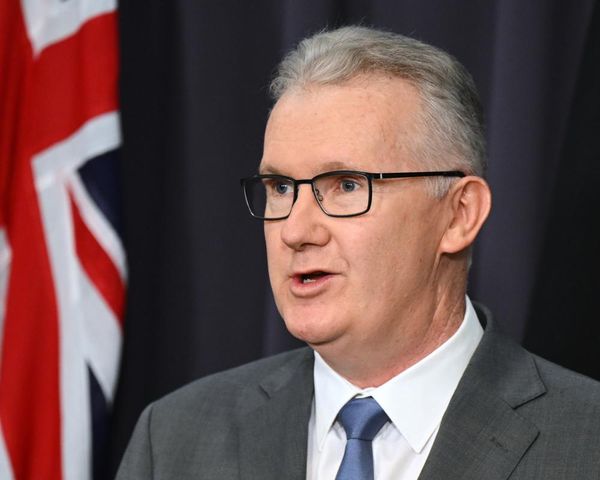
Barnaby Joyce is not what most people would describe as a reliable commentator on the climate crisis, though he can sometimes be memorable on a microphone.
In 2009, the then National party senator said, without evidence, that Labor’s doomed carbon pricing scheme would inflate the cost of a lamb roast to more than $100. It wasn’t true, but the claim reverberated through the political debate as a weapon and a punchline.
He later supported renewable energy developments in his electorate while deputy prime minister, but criticised them when on the backbench. In recent interviews – conducted in his new role as a figurehead for Pauline Hanson’s One Nation – Joyce has offered generalisations and bluster, ridiculing the idea that anything should or could be done about global heating.
He claims that climate policies have been “devastating for the country and for energy security [and] the cost of living”, that the climate change minister, Chris Bowen, thinks he is going to “change the weather”, and that the federal climate change department exists to “change the climate”. He claims in 10 years people will laugh at the idea there ever was a department dedicated to addressing the problem.
He gets plenty of chances to make these claims. The surge in people taking One Nation seriously – and lodging a protest vote for it as Labor won in a landslide at the South Australian election – has given the party expanded media attention. And Joyce is comfortably its most practised broadcast interviewee.
Many of his claims are less about the details, and more about signalling to a segment of voters who feel fed up with the major parties. But as One Nation is looking to position itself as a rival to the majors, with much greater support in polls than Joyce ever enjoyed in the Nationals, they shouldn’t pass unchallenged. So let’s act as though facts matter and get pedantic.
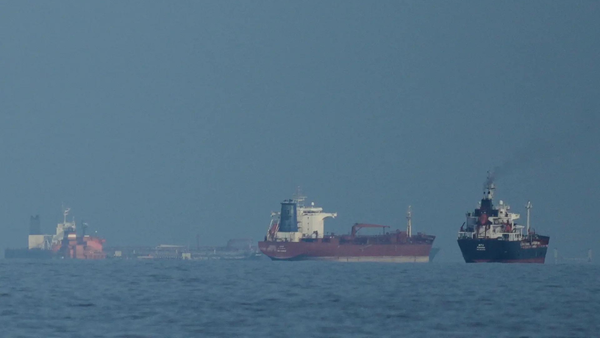
Energy prices have surged in Australia in recent years overwhelmingly due to expensive fossil fuels. They spiked dramatically in 2022 after Russia invaded Ukraine and the cost of gas on international markets skyrocketed. This has been documented, repeatedly. Similarly, the US-Israel conflict with Iran has triggered an extraordinary rise in the cost of oil.
Climate policies have had nothing to do with it. In both cases, war has triggered disruptions in supply chains and dirty fuels have become more expensive for those reliant on them. In Australia, that is still nearly everyone.
The jump in the number of people considering buying an electric car shows a growing number would like to end that reliance. Electric trucks are being trialled. But these solutions are not yet available or affordable for everyone.
Climate policies are sometimes contentious, particularly in regional areas where transmission lines are being built. Some developments are proposed in unsuitable places. But polls repeatedly indicate renewable energy, especially solar, is overwhelmingly popular. As Guardian Australia revealed, even Pauline Hanson has panels on her roof. Why? Because the energy is cheap.
Shifting to a system that runs largely on variable power sources backed by batteries and other sources is challenging. It’s a big job – the national electricity grid is being rebuilt in an entirely different configuration. There are questions about what will be the lowest cost way to do that. The government should take them seriously.
But renewable energy has already expanded rapidly and, despite the negative noise, is doing what was promised. At the turn of the decade it provided less than 23% of the National Grid’s electricity. It is about double that so far this year.
Not that long ago, some people claimed that would never be possible. But there was less volatility in the grid when demand for electricity peaked during heatwaves this summer than in previous years when some ageing coal plants were offline for maintenance and operational failures.
What does Joyce mean by “energy security”? The supply of sun and wind is secure and uninterrupted if captured and properly backed up. That’s an engineering and policy challenge, but the technology exists to meet it.
The global supply of fossil fuels is a different sort of challenge – one Australia cannot control. Wild ideas about encouraging exploratory drilling in the Gulf of Carpentaria and the Great Australian Bight so the country may develop its own oil industry will not change that.
The point of climate policy is not to change the weather or the climate. It’s for Australia to play its part as a responsible global citizen to limit temperature increases and catastrophic events, and to make the most of economic opportunities as the world cuts emissions and clean industries grow. In many cases it supports things, such as solar panels and EVs, that are cheaper and healthier alternatives. Done properly, it is to make people’s lives better.
One Nation, of course, openly denies there is a crisis to address. The sole climate policy on its website is that Australia should pull out of the Paris agreement (though it gets the year in which the agreement was signed wrong). It claims historic temperature records aren’t accurate, but then uses an unreliable, unstandardised 19th century thermometer record from Newcastle to suggest the heating painstakingly demonstrated in thousands of independent peer-reviewed studies across the globe isn’t actually happening.
It’s quite possible many of One Nation’s newfound supporters couldn’t care less about any of this, given it appears to be a protest movement defined more by what it is against than what it is for.
But it is still worth comparing what Joyce claims on the climate crisis with someone with actual expertise, such as the executive director of the Paris-based International Energy Agency, Fatih Birol, who was in Canberra this week. Not everyone will agree with his conclusions about Australia’s treatment of liquified natural gas exports during the fuel crisis – he argued against the growing case for a tax increase on the industry – but Birol was clear on the direction the world is heading in.
He pointed out 85% of the electricity capacity installed across the globe last year was renewables. There was a 40% rise in battery installation and 25% of the cars sold were electric. In other words, the future is here. The question is now the speed – and whether the fuel crisis triggered by the US-Israel war on Iran will lead to an acceleration, as much in the name of energy security as climate action.