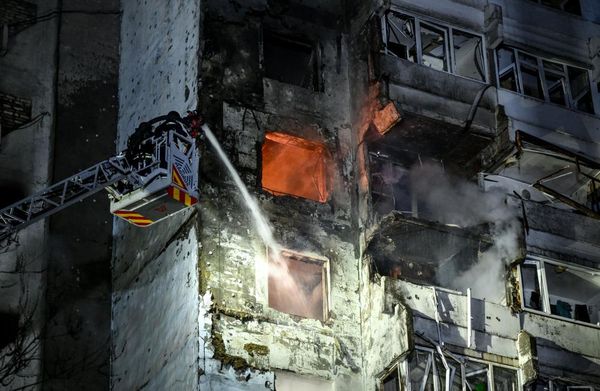
President Donald Trump’s top intel officer, Tulsi Gabbard, and CIA Director John Ratcliffe appeared to contradict the White House’s key justification for the war in Iran while testifying Thursday before the House Intelligence Committee.
The officials dodged numerous questions about whether Iran was preparing a preemptive strike on the U.S. or if it was close to achieving a nuclear weapon.
Gabbard repeatedly testified that Trump was responsible for determining whether Iran posed an “imminent threat” to the U.S. ahead of launching his war on the country late last month. Meanwhile, Ratcliffe contradicted Trump’s claims that the strikes were to spur regime change in Iran.
The officials faced similar questions about global threats before the Senate on Wednesday.
Here is a recap of the hearing:
11:25 a.m. — Open portion of House hearing concludes
The open portion of the House Intelligence Committee’s worldwide threats hearing concluded.
The committee is moving to a closed session to question the intelligence officials about classified information.
11:00 a.m. — Gabbard admits Iran can still cause trouble in the Strait of Hormuz
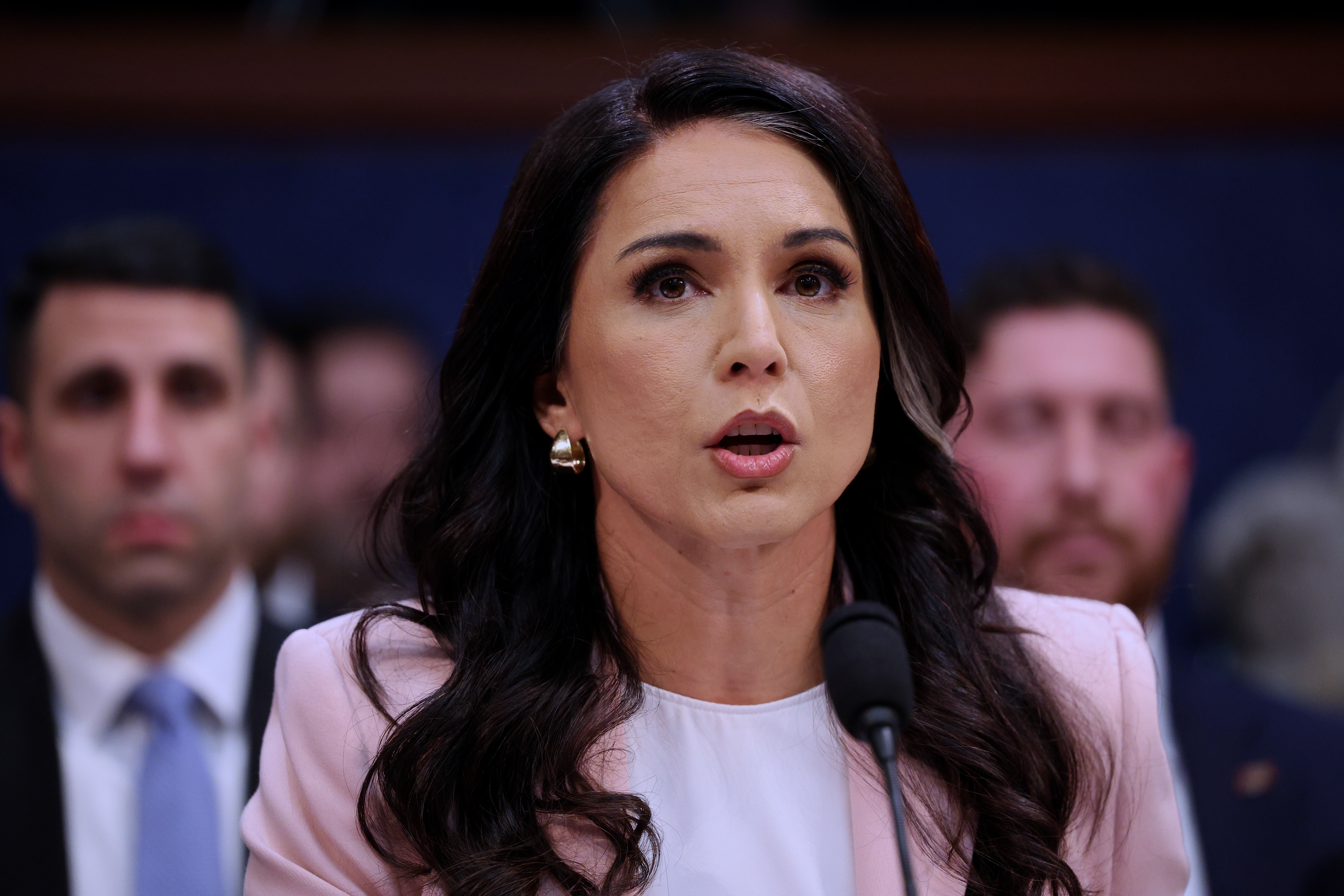
Director of National Intelligence Tulsi Gabbard admitted Iran still has the capability to threaten ships from passing through the Strait of Hormuz.
“Their capabilities have been largely degraded, but yes, they still have means to threaten passage to the Strait of Hormuz,” Gabbard said, later admitting she didn’t know how long Iran could keep the passageway closed.
Congressman Steve Cohen then inquired whether President Donald Trump was briefed on if the Strait of Hormuz could be closed.
“Why would the president not have taken action to strengthen defenses around the Strait of Hormuz?” Cohen asked.
“All I can say is the president ultimately is responsible for making the decisions based on the totality of information and intelligence that he has available to him,” Gabbard replied.
10:35 a.m. — Dem questions the point of the intelligence community if only Trump determines security threats
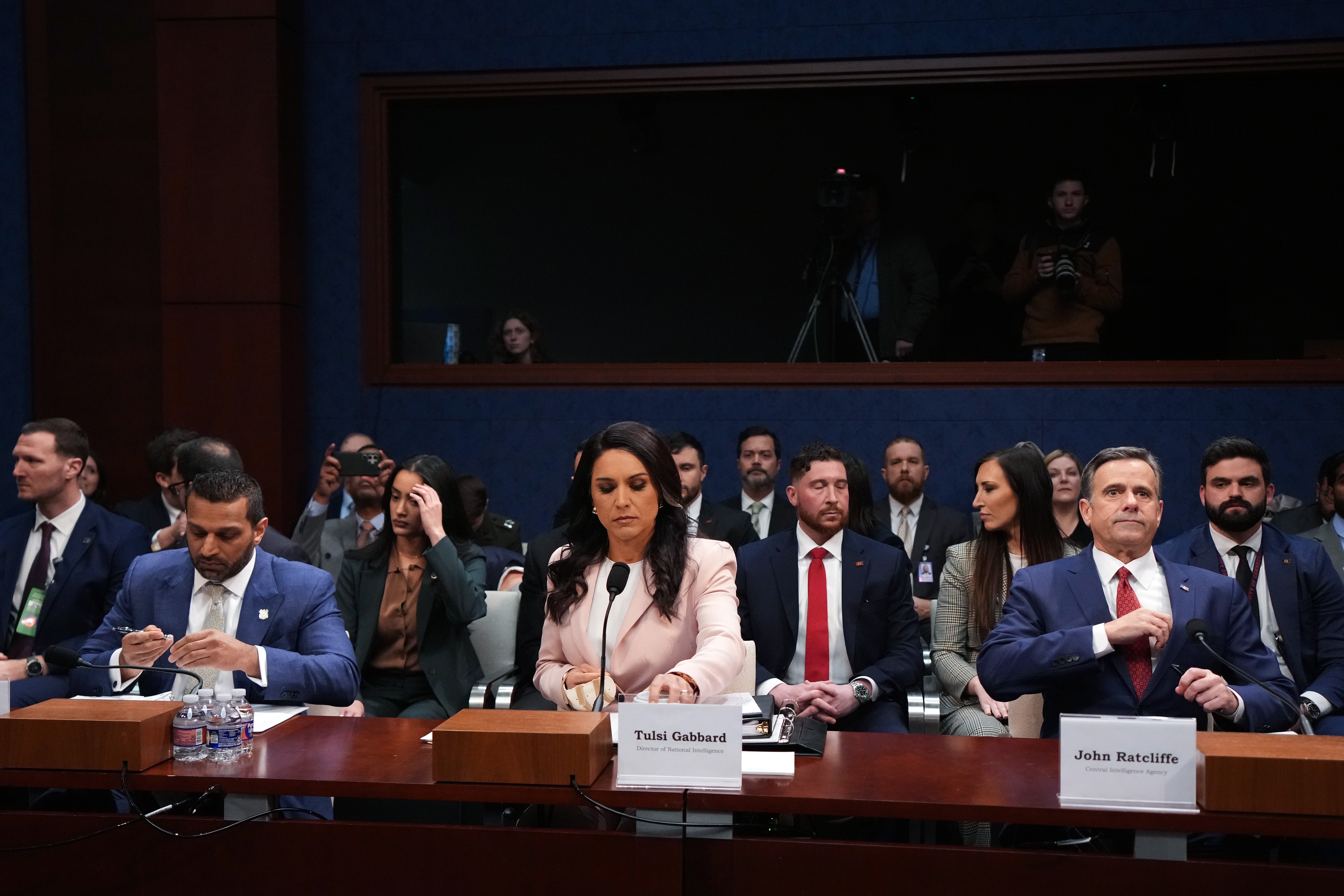
California Democratic Congressman Jimmy Gomez questioned how top intelligence officials “even have a job” if President Donald Trump “can just ignore what you’re doing” and decide what he deems to be an imminent threat.
“Why do you even advise him?” Gomez asked the officials. “So you’re saying that tomorrow, the president of the United States can say that China is an imminent threat — no matter what the intelligence says — and that he can take his own action?”
“That’s what you’re basically saying,” Gomez said.
10:30 a.m. — Kash Patel dodges question over FBI firings
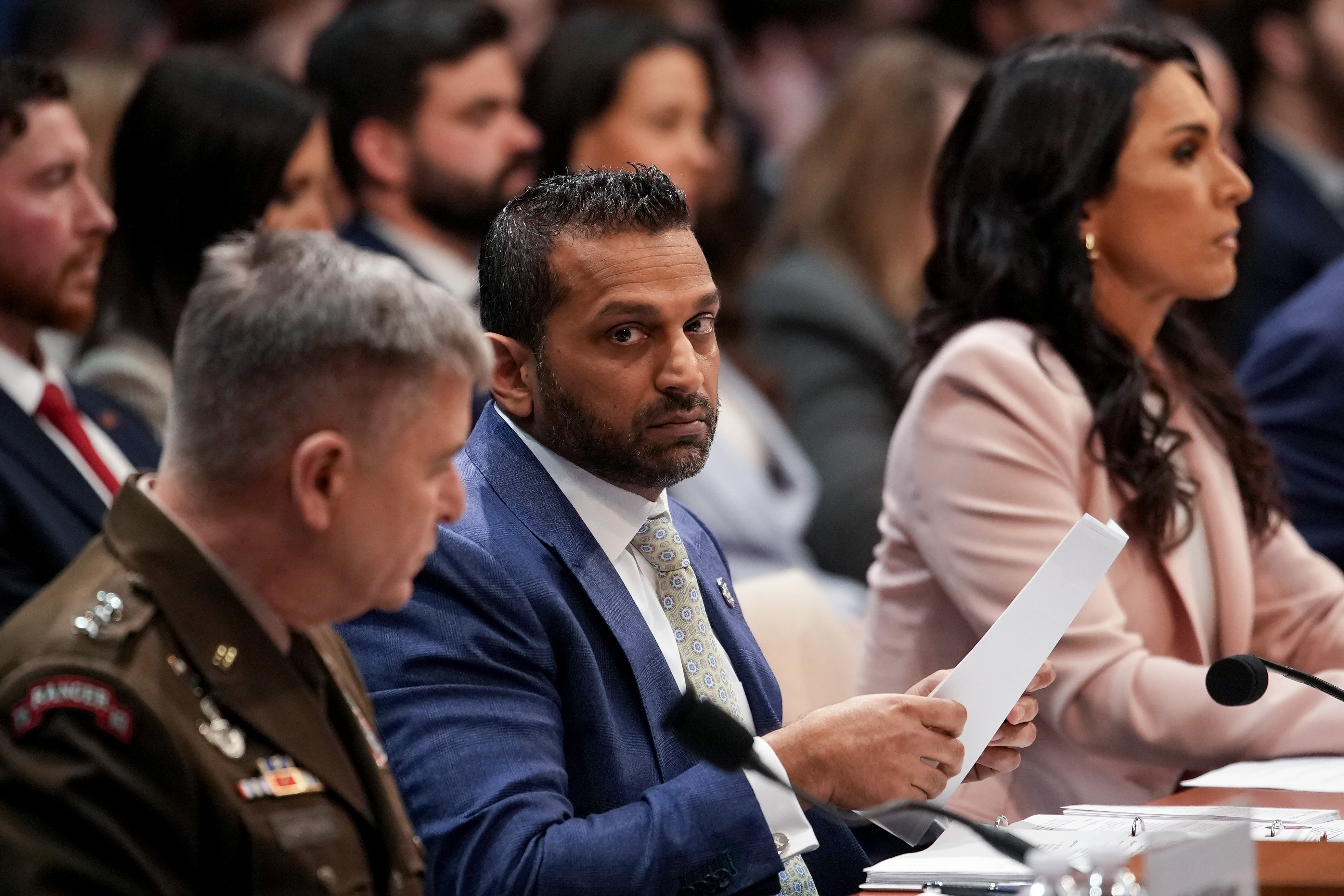
FBI Director Kash Patel dodged a question over whether FBI staff were fired because they had been investigating President Donald Trump’s hoarding of classified documents at Mar-a-Lago.
The group of about a dozen agents who were let go worked on the probe into classified documents, but were also part of an elite global spy unit that monitors threats from Iran, according to reports.
“I’m asking about whether those people were fired because they were involved in the investigation of document-handling by President Trump, not for behavior issues. Is that your understanding?” Pennsylvania Rep. Chrissy Houlahan questioned.
Patel replied: “I can’t comment on that because there’s pending litigation.”
“You collectively must have been aware when these firings happened that there was a meaningful chance the U.S. might be engaged with a war in Iran and having these very expert, super qualified folks summarily dismissed at this time just feels like an odd choice in timing,” Houlahan noted.
She later added: “I’m worried that we are taking really good, really qualified people and picking fights with one another across party lines, rather than making sure we protect ourselves and keep ourselves safe.”
Patel was questioned again about the agents’ firings by Congressman Steve Cohen, who directly asked if the FBI agents who were fired were experts on Iran — to which Patel replied: “I don’t think so.”
“They worked in counterintelligence, did they not?” Cohen questioned.
“I’m taking you at your word, sir,” Patel replied, prompting Cohen to fire back: “You’re the director. I’m not. You should know the answer. You fired the people, where did they work?”
10:15 a.m. — CIA Director contradicts Trump and says objective in Iran was not regime change
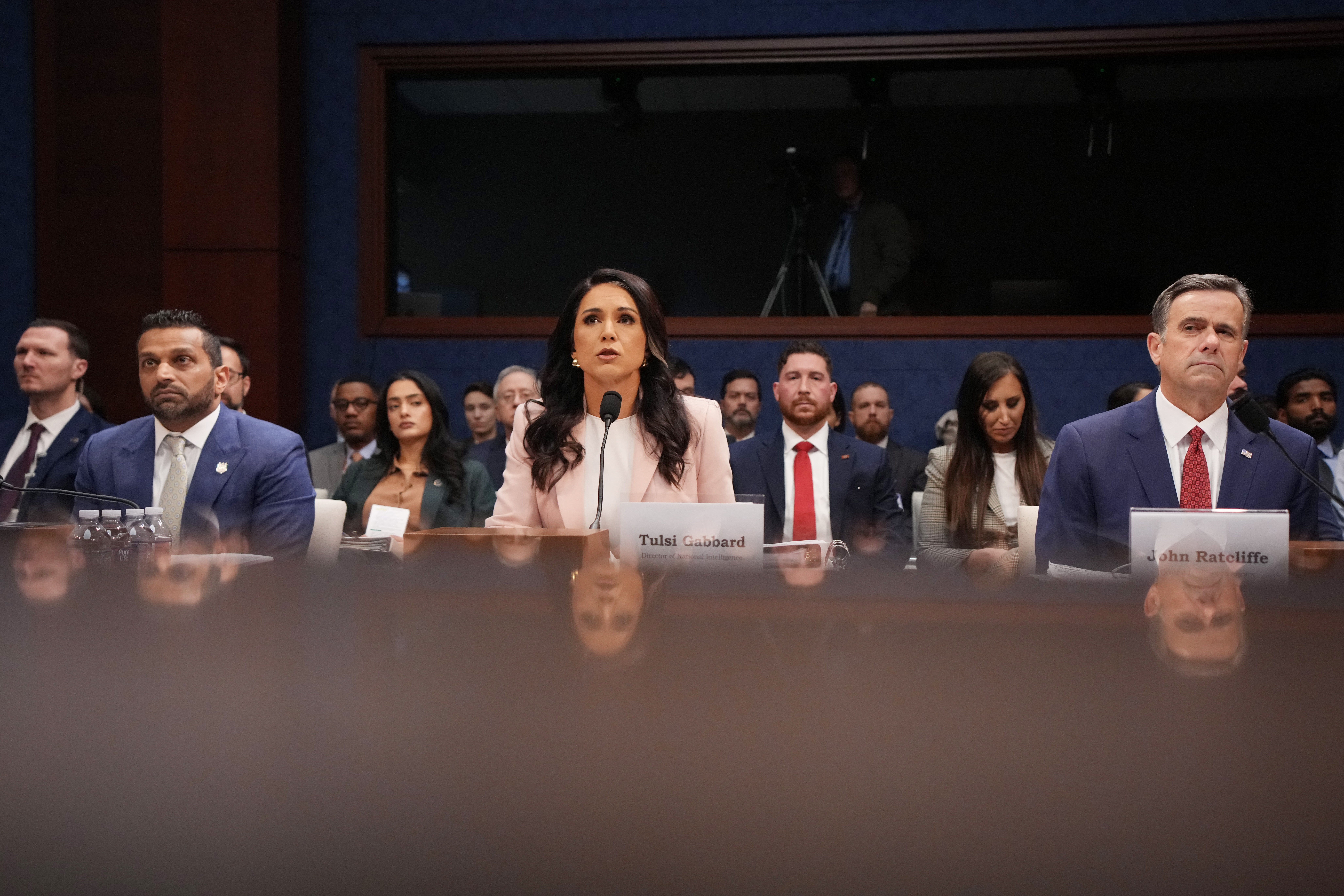
CIA Director John Ratcliffe testified Thursday that President Donald Trump’s objectives in launching an attack on Iran were not to force regime change.
“To be clear, the president’s objectives with respect to Operation Epic Fury did not include regime change. That may be different from what Israel’s objectives were,” Ratcliffe told New Jersey Rep. Josh Gottheimer.
However, his testimony is at odds with a statement Trump made late last month, immediately after the U.S. launched attacks on Iran.
“To the members of the Islamic Revolutionary Guard, the armed forces and all of the police, I say tonight that you must lay down your weapons and have complete immunity. Or in the alternative, face certain death. So, lay down your arms. You will be treated fairly with total immunity, or you will face certain death,” Trump said at the time.
He continued: “Finally, to the great proud people of Iran, I say tonight that the hour of your freedom is at hand. Stay sheltered. Don't leave your home. It's very dangerous outside. Bombs will be dropping everywhere. When we are finished, take over your government. It will be yours to take. This will probably be your only chance for generations.”
9:50 a.m. — Gabbard refuses to say whether Iran was planning a preemptive strike against the U.S.
While facing questioning on Thursday, Director of National Intelligence Tulsi Gabbard refused to say whether Iran was planning a preemptive attack on the United States.
Congressman Andre Carson, a Democrat from Indiana, questioned Gabbard about the evidence of a planned attack before the war, adding, “I ask this because 13 service members have been killed in Trump’s war, including Captain Seth Koval, a husband and a dad from my state of Indiana — and my constituents want answers.”
“Congressman, the answer to this question needs to be reserved for a closed hearing. I will say, however, the intelligence community does provide the assessments of the threats that exist to the president so he can make that determination...”
Gabbard continued before telling Carson that Trump is responsible for determining what classifies as an imminent threat.
Congressman Jason Crow, a Colorado Democrat, later questioned Gabbard about whether assessments were made about the timing of potential threats to the U.S.
“I’m sure there were timelines factored into the intelligence assessments that were delivered,” Gabbard said.
When pressed further on whether any of the timelines showed imminence, Gabbard replied, “The imminent nature of a threat is determined by the president based on a totality of the intelligence and information provided to him.”
Gabbard declined to say whether any intelligence showed that an attack on the U.S. from Iran was imminent in the 90 days leading up to when the U.S. launched its first attack.
Crow later cut the National Intelligence Director off, telling her, “The bottom line is there was no imminent threat, and you know that, and there’s no product that shows that.”
Netanyahu is copying Putin’s dreadful tactics in Iran –and it will backfire badly
Iran-US war live: Hegseth slams ‘ungrateful allies who must thank Trump for winning’
Palestinians were bystanders to the Iran war. Now they're victims too
Why $138 is the key mark for oil prices and what it means for the US economy
‘Trump’s favorite Democrat’ bails out Noem replacement pick Markwayne Mullin
US fighter jet makes emergency landing after being hit by Iranian fire