The Royal Australian Navy’s Collins-class submarines had a troubled start, but one of them eventually achieved a remarkable simulated victory against a US Navy carrier group in 2000s
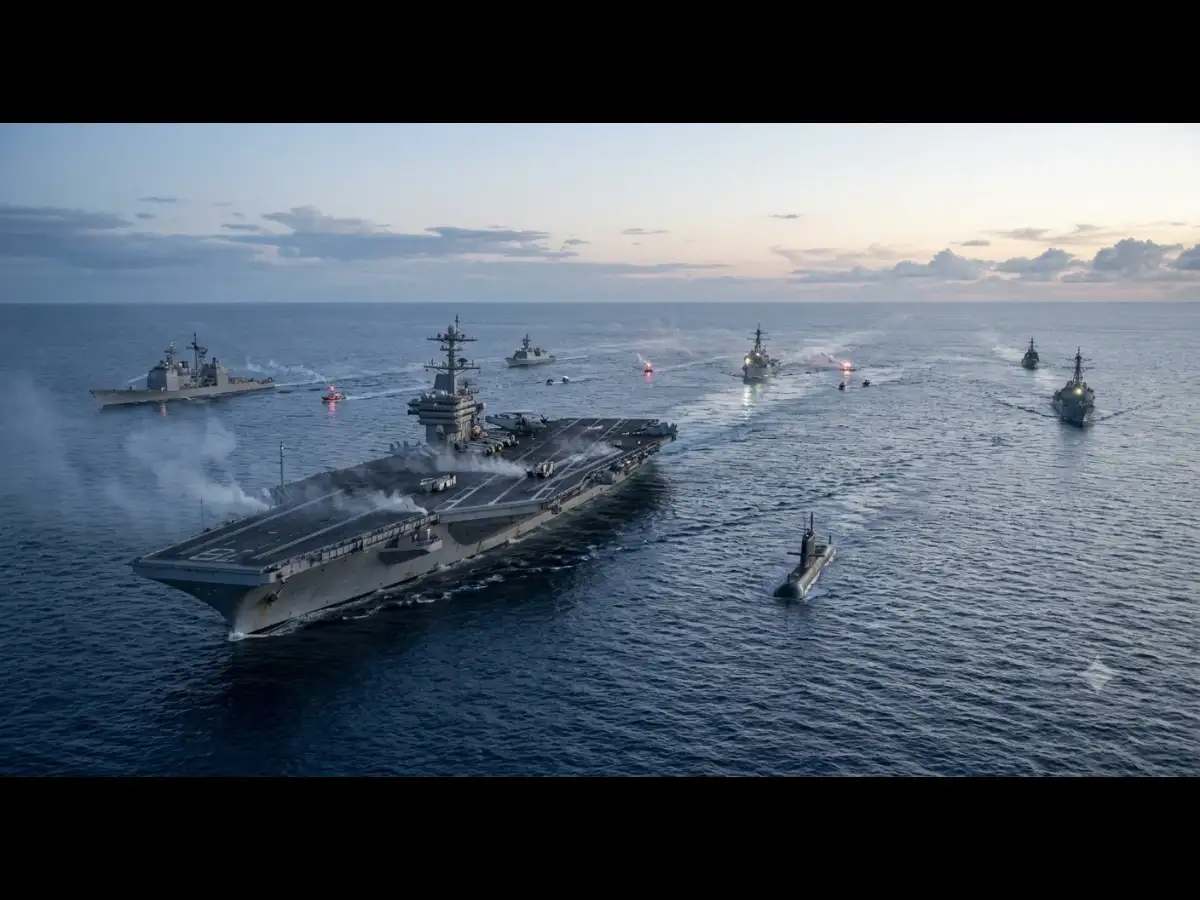
HMAS Waller, an Australian diesel-electric submarine, reportedly penetrated the defenses surrounding the USS Abraham Lincoln (CVN-72) during multinational war games and reached a position considered close enough for a simulated torpedo attack.
The dramatic encounter showed how a relatively smaller conventional submarine could challenge one of the world's most powerful naval forces at least under controlled exercise conditions.
How the Australian submarine got past US defenses
The Collins-class entered Australian service in the late 1990s, replacing the older Oberon-class submarines.
The new boats initially faced criticism over:
- High noise levels while underway
- Mechanical problems
- Operational difficulties
Challenges with Australia's submarine training system
Australia eventually upgraded the submarines and improved crew training, helping the Collins-class establish a stronger reputation. Its biggest international test came during multinational exercises in the early 2000s.
During US-led war games around Hawaii and waters north of Australia, HMAS Waller initially integrated with a US carrier battle group.
But the Australian submarine was also assigned an opposing role. Its mission was to act as an enemy submarine and attempt to penetrate the carrier group's defenses.
Waller reportedly managed to get through the submarine screens protecting the carrier and made close-in observations of the USS Abraham Lincoln.
The submarine even provided photographic evidence that it had reached a position considered to be within torpedo-firing range.
The episode was widely celebrated in Australian media.
But the ‘sinking’ was only simulated
The Abraham Lincoln was not actually sunk. The encounter happened during a controlled military exercise, where participating forces simulate attacks and defensive operations.
Australian naval sources also warned that exercise results should not automatically be interpreted as proof of what would happen in an actual war.
A naval source told the Australian Financial Review: “Neither achievement is a useful guide to performance unless you understand the full context,”
A former officer similarly said: “Photographing aircraft carriers is a submarine pastime,” He explained: “exercises are designed so that everybody goes home happy.”
Even so, under the exercise conditions, Waller reportedly evaded US, Japanese, Canadian, Chilean, South Korean and British forces and demonstrated that it could get remarkably close to a heavily defended American carrier.
Why Australia is replacing the Collins class
Despite the submarine's impressive exercise record, Australia is preparing for a major change in its underwater fleet.
In 2021, Australia joined the AUKUS partnership with the United States and United Kingdom, announcing plans to acquire nuclear-powered submarines.
Nuclear propulsion gives submarines significantly greater endurance than conventional diesel-electric boats.
The decision also ended Australia's earlier submarine agreement with France's Naval Group. French President Emmanuel Macron accused Australia of deception and betrayal and described the decision as a: “stab in the back.”
Collins-class submarines still have years left
The Collins-class will remain in Australian service while Canberra develops the infrastructure and expertise needed for nuclear-powered submarines.
The submarines are expected to remain operational into the late 2030s through a major life-extension program.
For a class that began with technical problems and controversy, its legacy is now considerably more complicated — and HMAS Waller's simulated encounter with a US carrier remains one of its most memorable chapters.
FAQs
How much did the Australian Collins-class submarine cost?
The Collins-class program involved billions of dollars in spending. Individual boat cost figures vary depending on how construction, systems and program expenses are calculated.
Did an Australian submarine really sink USS Abraham Lincoln?
No. HMAS Waller's attack was simulated during a military exercise. The submarine reportedly reached a position where it could have conducted a simulated torpedo attack.
Which Australian submarine penetrated the US carrier group's defenses?
The submarine was HMAS Waller, a Collins-class diesel-electric submarine.
What was the target?
The target was the USS Abraham Lincoln (CVN-72), a nuclear-powered US Navy aircraft carrier.
When did the incident happen?
The encounter occurred during multinational naval exercises in the early 2000s.
Why was HMAS Waller able to approach the carrier?
Waller was operating as an opposing submarine during a controlled exercise and reportedly penetrated the carrier group's submarine defenses before approaching the aircraft carrier.
Are Collins-class submarines still in service?
Yes. Australia plans to keep the Collins-class operating into the late 2030s while transitioning toward nuclear-powered submarines.
What is Australia getting through AUKUS?
AUKUS is expected to give Australia access to nuclear-powered submarine technology through cooperation with the United States and United Kingdom.