Get Premium
Dark mode theme is available exclusively for premium users. Learn more about the benefits of subscribing.
No fees, cancel anytime.

 Dark Mode Ad-Free Browsing Unlimited Content
 Ad-Free Browsing Unlimited Content Dark Mode
Join 1.2 million Panda readers who get the best art, memes, and fun stories every week!
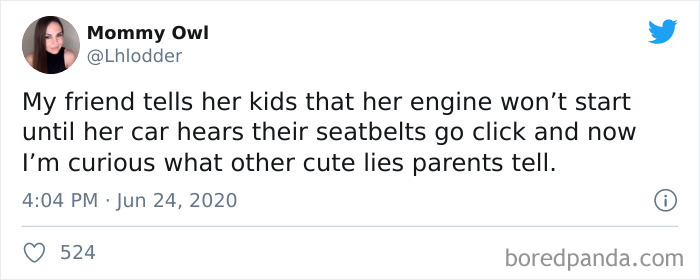
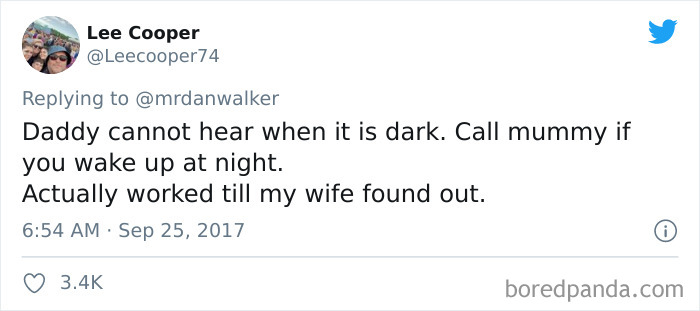
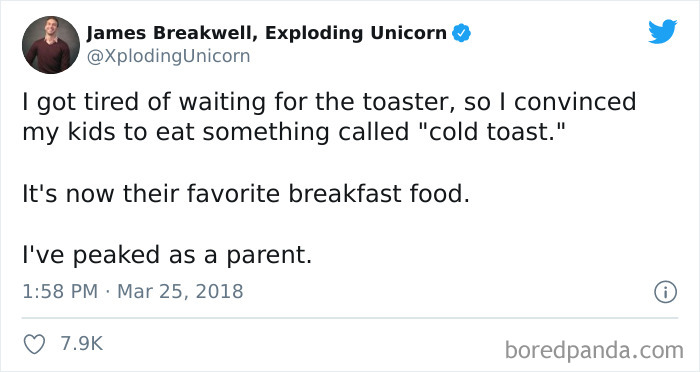
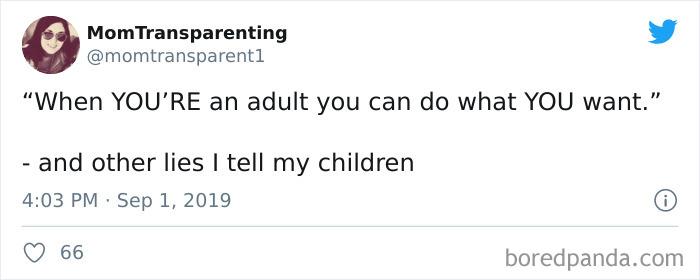
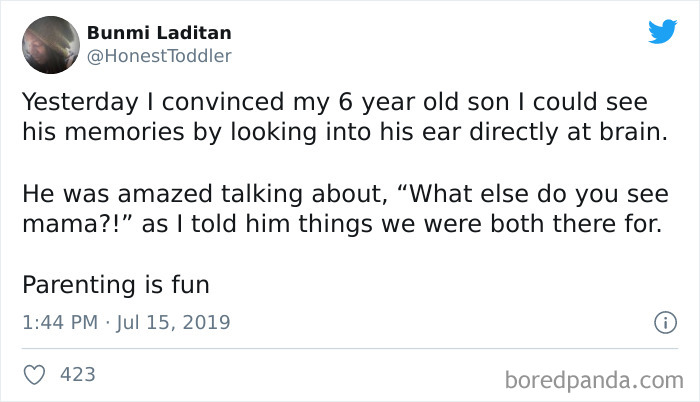
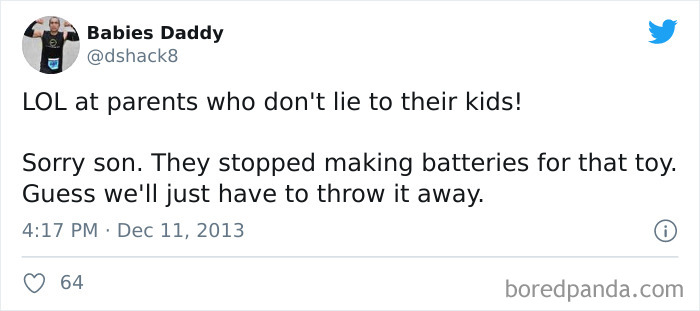
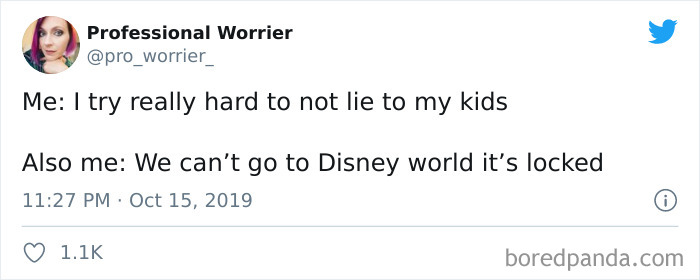
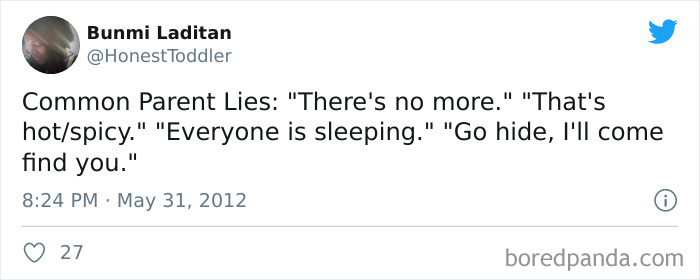
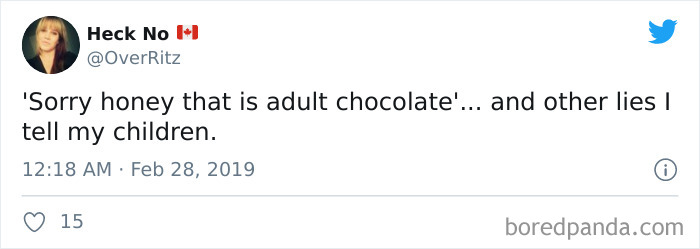
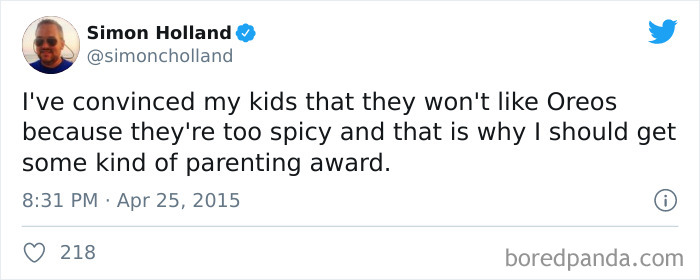
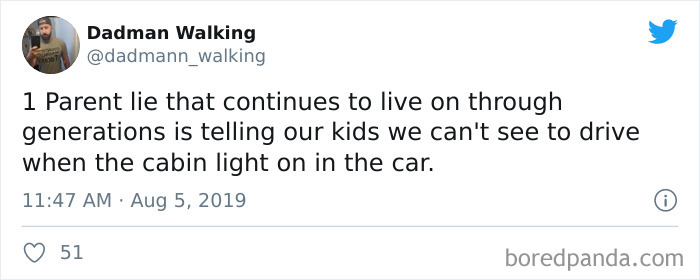
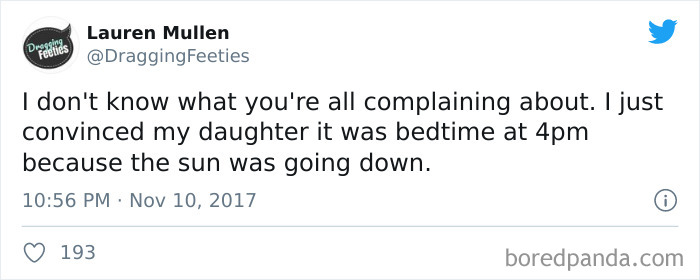
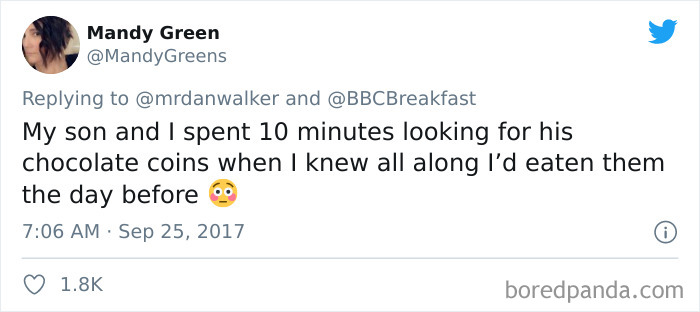
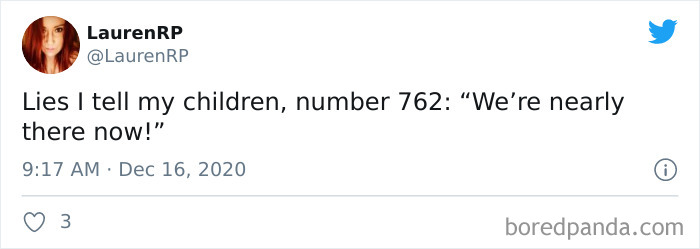
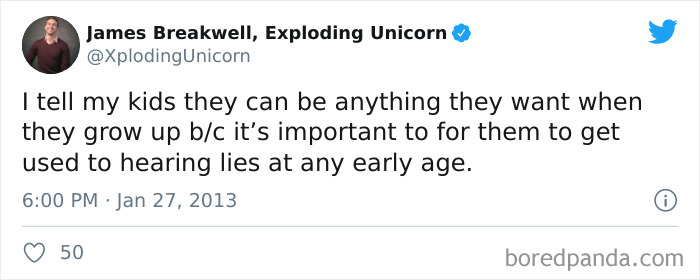
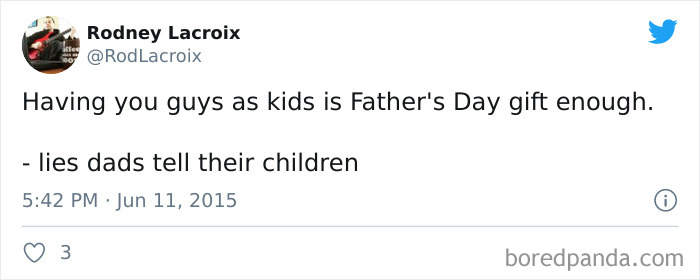
Parenting is all about unconditional love, empathy, and family values. But it also involves a few bottles of wine, bribery, and lying. Fortunately, moms and dads aren't sugar-coating any of it.
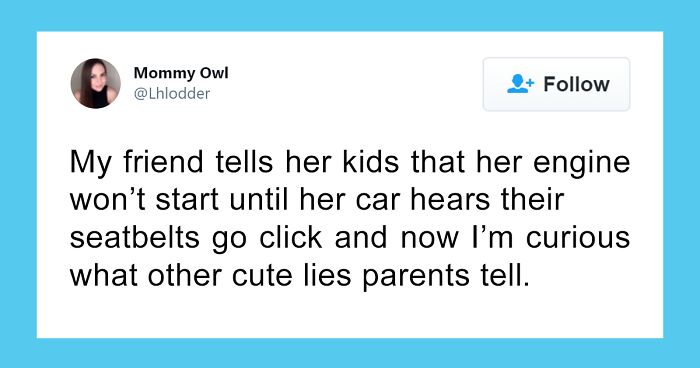
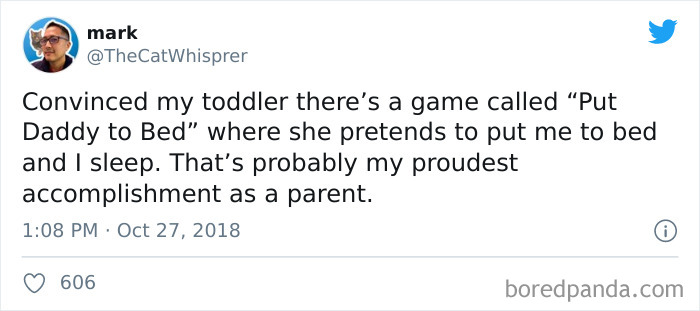
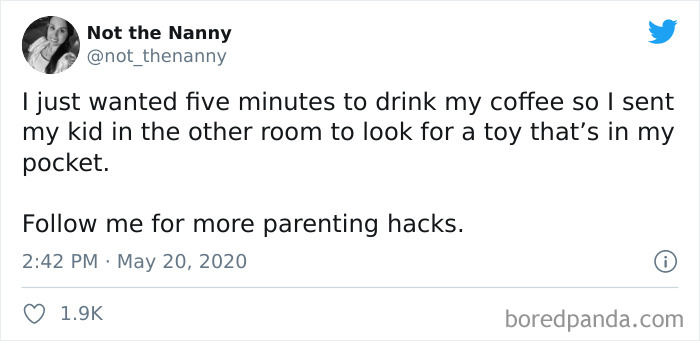
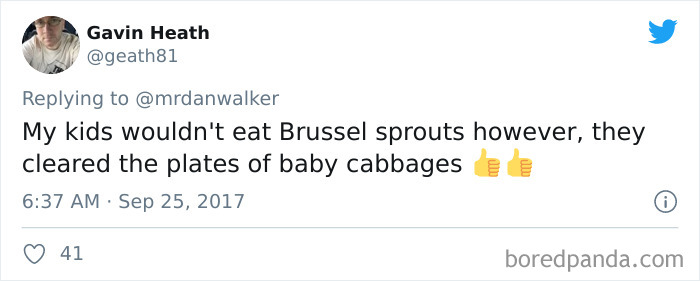
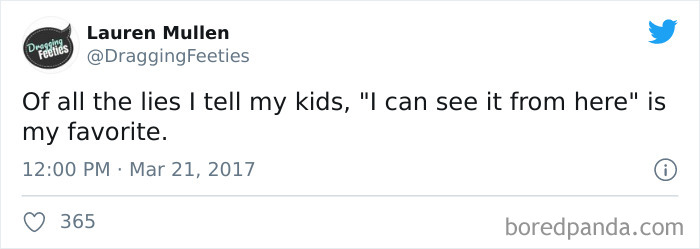
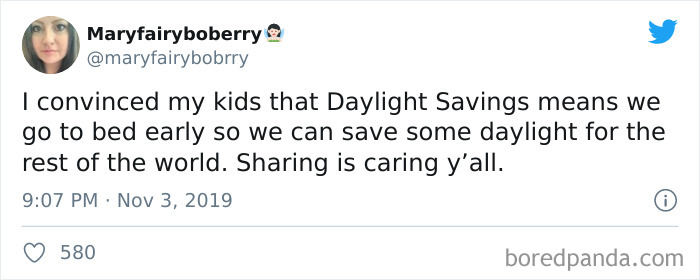
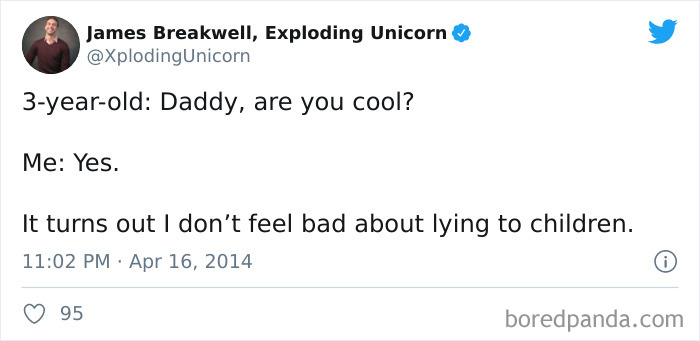
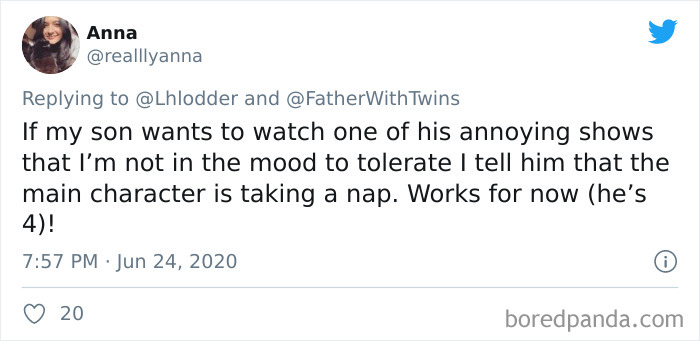
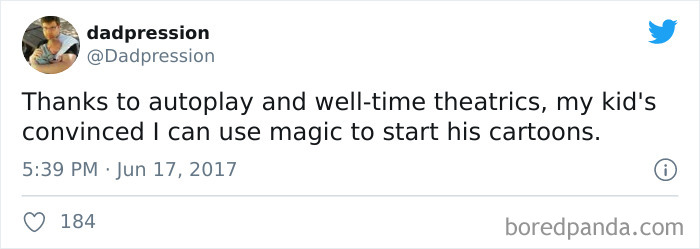
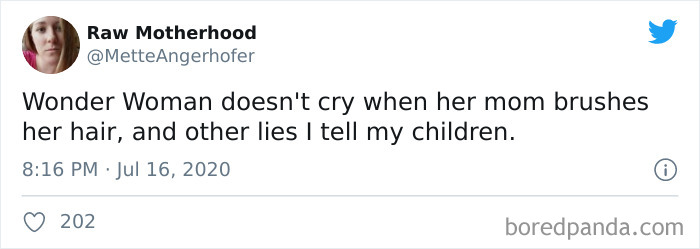
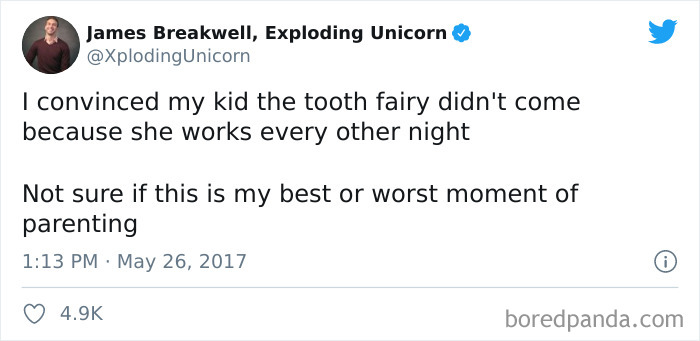
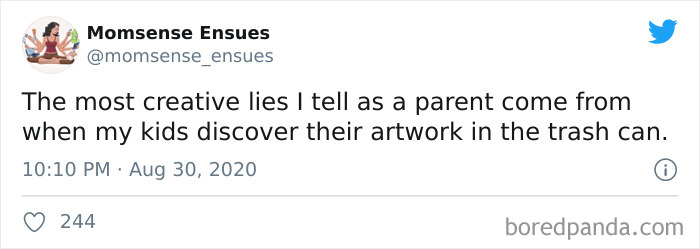
To show you that being a hypocrite isn't necessarily a bad thing, Bored Panda put together a list of tweets where parents share the times they... stretched the truth with their kids. From the classic "I can see it from here" to the new-age "Hummus is princess food", we included them all. Enjoy!
This post may include affiliate links.
However, people should be really careful when it comes to lying to kids. Imagine this: An adult meets a child and says: "There is a huge bowl of candy in the next room. Want to go get some?" The child agrees and follows the adult into the room.
But there is no candy.
The adult admits it was a lie, explaining, "I just said that because I wanted you to come play with me."
This was the first step in an experiment by Chelsea Hays and Leslie Carver. The researchers subjected 46 children to this trick, and as you can probably guess, these kids felt disappointed. But the children were polite and agreed to play with the adult anyway.
This leads to the second part of the experiment—a guessing game.
For this phase, each child was asked to stare straight ahead while the adult held a toy behind the child's back.
The toy represented a familiar fictional character (like Winnie the Pooh, or the Cookie Monster), and the child had to guess the identity of the toy without looking.
After playing two rounds of the game, the adult suddenly told the child that she had to leave for a minute to answer a phone call.
She said she'd be right back and the two of them would continue the game. Meanwhile, she explained, she was going to leave behind the next toy to be identified (she covered it so the child couldn't see what it was) and put it on a table.
"Don't peek while I'm gone!" she said.
The adult was gone for 90 seconds. During this period, a hidden camera recorded the child's activities. When the adult came back, she asked the child to promise to tell the truth, asking "When I was gone did you turn around and peek to look at the toy?"
Hays and Carver recorded the answers, and compared the results to those of children in a control group (47 kids who went through the same procedure, but without the initial trickery).
The results were really interesting. Compared with older children, 3- and 4-year-olds tended to peek more often. But they also tended to tell the truth more often. Their responses didn't vary by the condition—being lied to did not make a difference.
But the behavior of older kids (ages 5 and up) depended on the adult's track record. The kids who had been tricked by the adult were more likely to peek. They were also more likely to lie about it afterward.
Now at least you know the potential consequences of lying to a child. Assuming they catch you...

Is it just me, or are half of these just people being shitty parents, as well as shitty people?

Interesting that you also found it. I also perceive two different types of entries here: those that are funny because the parents do not take themselves too serious and realize parenting is a lot about improvising – I think most parents can relate, and it can be hillarious. And those who seem to excuse lies for situations when they were to lazy to actually care or refused to understand how children perceive the world.
Load More Replies... Is it just me, or are half of these just people being shitty parents, as well as shitty people?
Interesting that you also found it. I also perceive two different types of entries here: those that are funny because the parents do not take themselves too serious and realize parenting is a lot about improvising – I think most parents can relate, and it can be hillarious. And those who seem to excuse lies for situations when they were to lazy to actually care or refused to understand how children perceive the world.
Load More Replies...



























 No fees, cancel anytime