Get Premium
Dark mode theme is available exclusively for premium users. Learn more about the benefits of subscribing.
No fees, cancel anytime.

 Dark Mode Ad-Free Browsing Unlimited Content
 Ad-Free Browsing Unlimited Content Dark Mode
Join 1.2 million Panda readers who get the best art, memes, and fun stories every week!

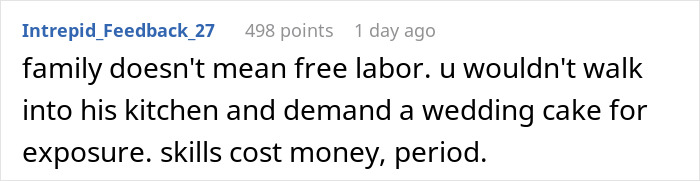
Most families operate under the assumption that they can sometimes ask their relatives for help when it’s needed. But finding the line between a normal request and, in practice, free labor can sometimes be more complicated than it might appear. However, regardless of how much is being done, diminishing the help someone gave you is always a bad look.
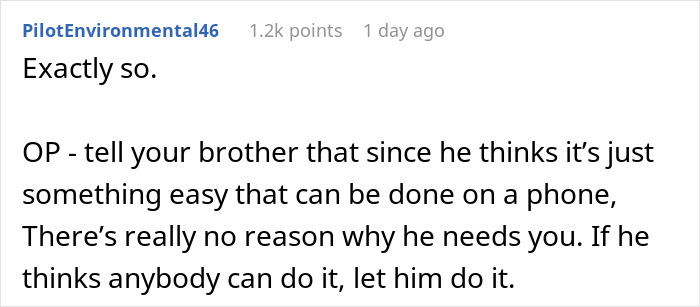
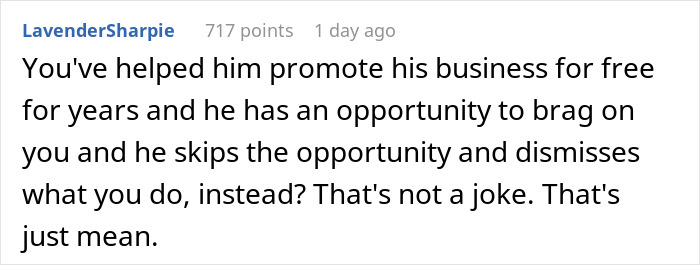
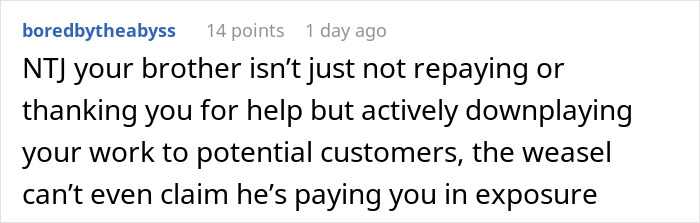
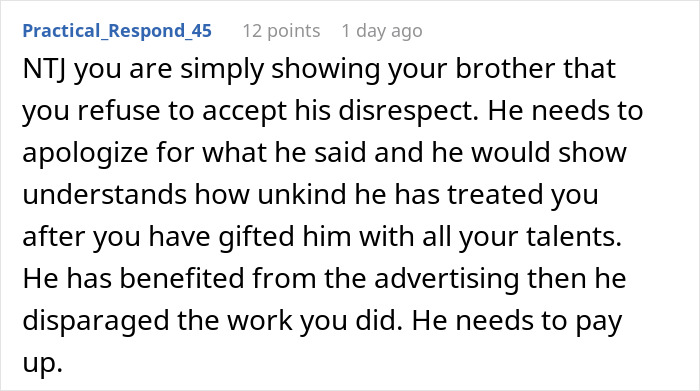
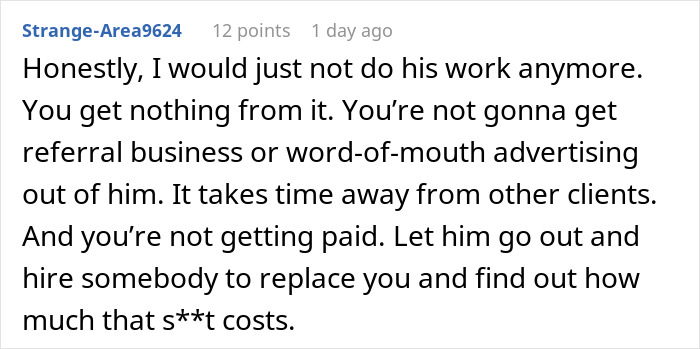
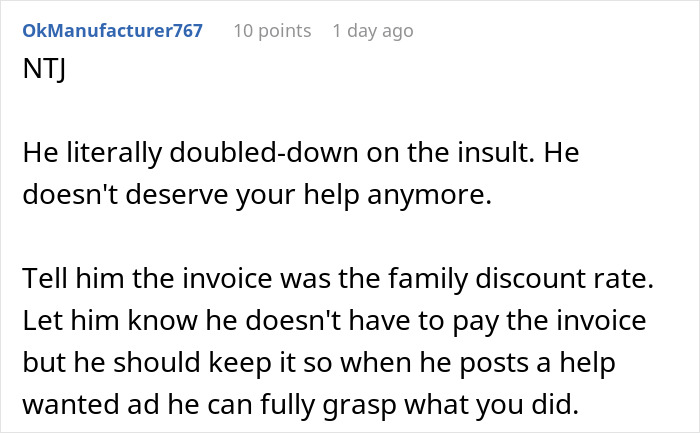
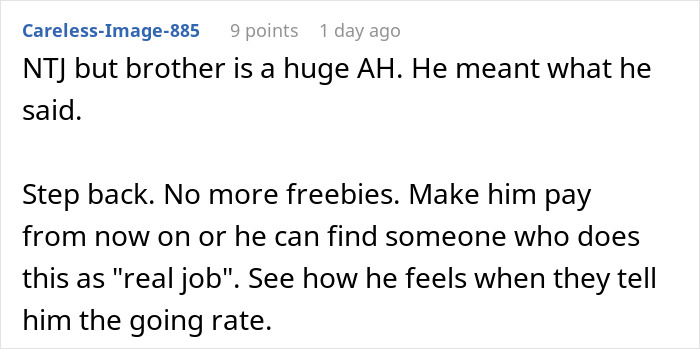
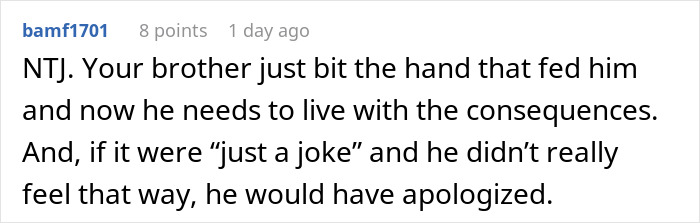
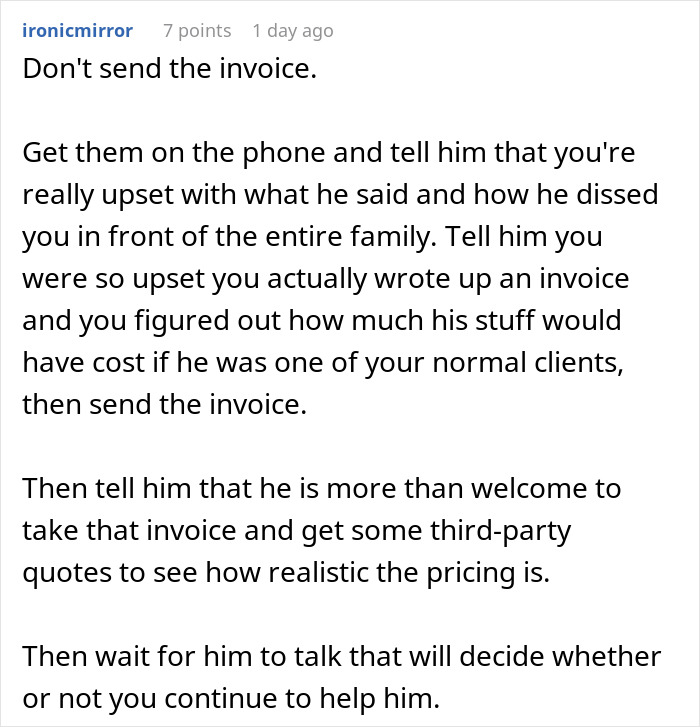
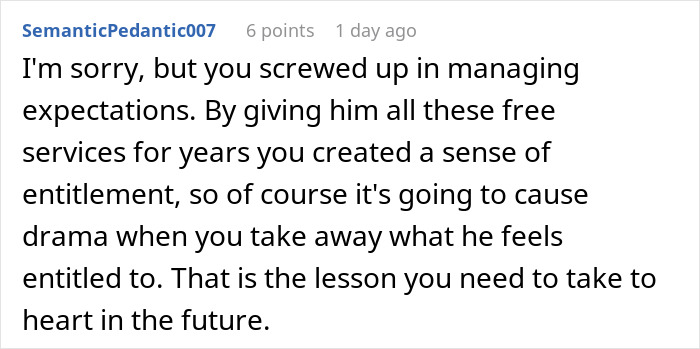
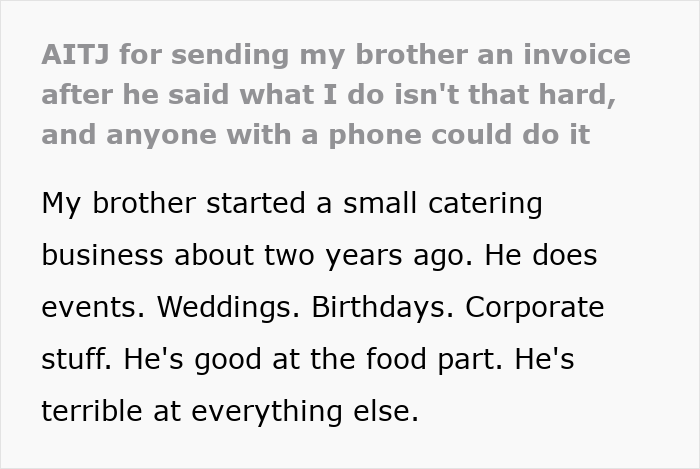
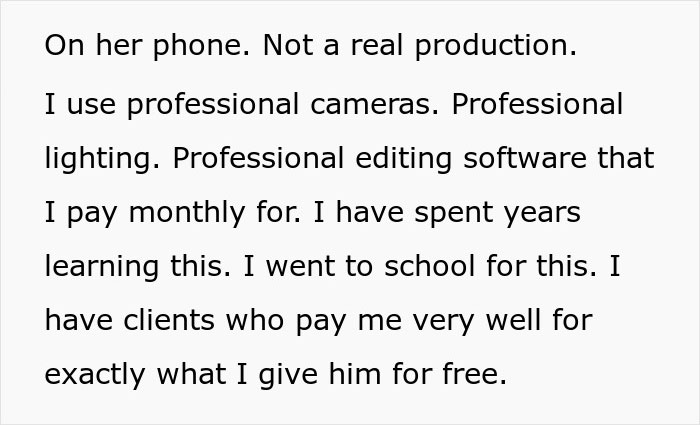
A woman asked the internet if she went too far after sending her brother an invoice for three months work after helping him for years, free of charge. Her decision was spurred on by him publicly mocking the work she did, saying that it wasn’t hard and that anyone could have done it.
Image credits: MART PRODUCTION / Pexels (not the actual photo)

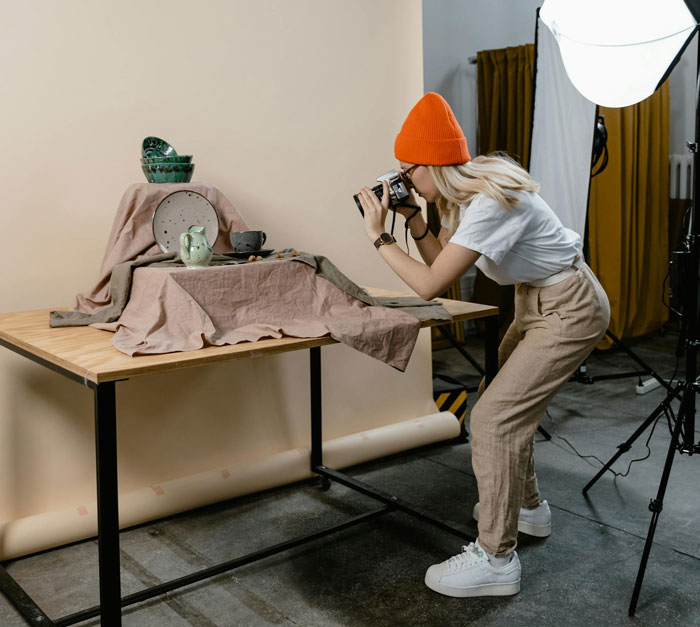
Image credits: Polina Zimmerman / Pexels (not the actual photo)
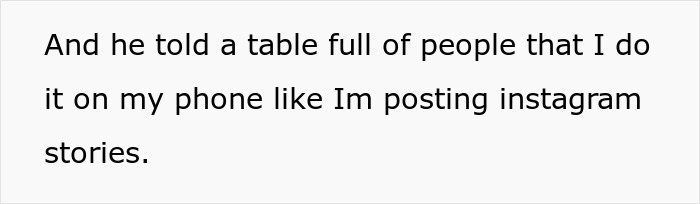
Image credits: Nataliya Vaitkevich / Pexels (not the actual photo)
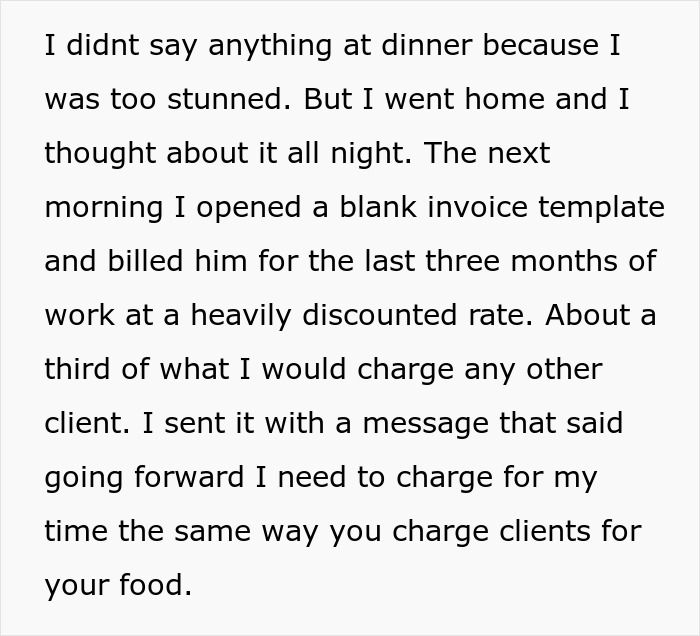
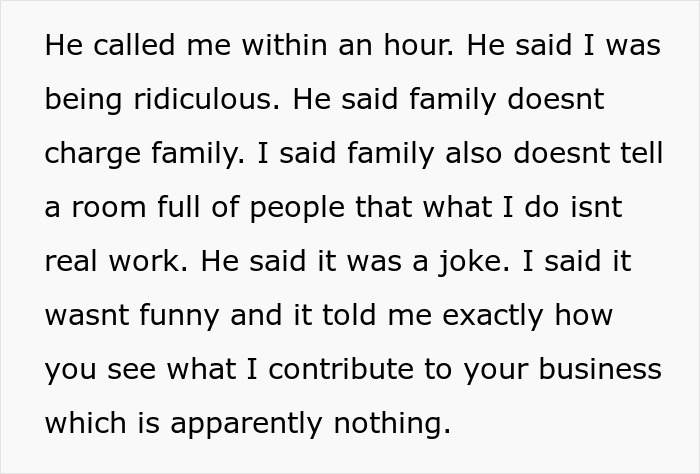
Image credits: blushy_glowingz
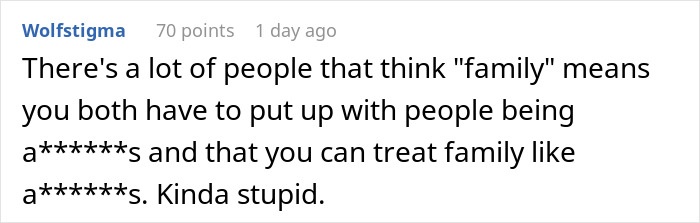
Entitlement within family dynamics often manifests as a subtle yet pervasive expectation that personal relationships supersede professional value. When a family member builds a career based on specialized skills such as photography or videography, relatives may perceive those talents as a natural resource rather than a labored craft. This phenomenon is frequently discussed in psychological circles as a lack of emotional boundaries where the distinction between a sibling and a professional service provider becomes blurred.
According to studies on family systems theory, members often assign roles to one another that ignore external realities like professional training or financial necessity. When one sibling provides thousands of dollars in labor without compensation, they are essentially subsidizing the other person’s dream at the expense of their own time and resources. This behavior thrives on the assumption that family loyalty creates a permanent debt that can be called in at any time without acknowledgment or reciprocity.
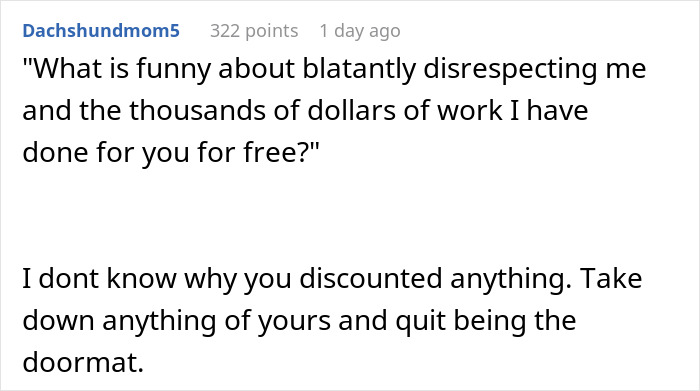
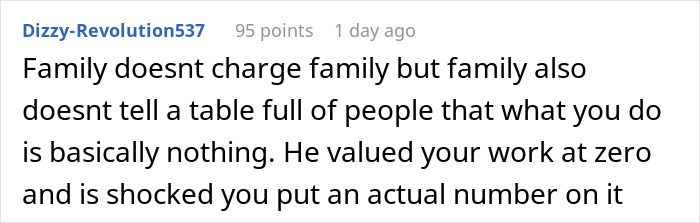
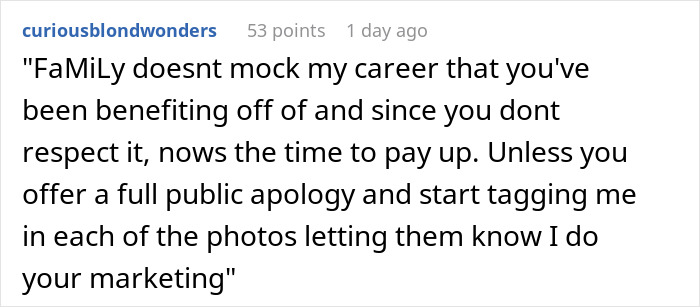
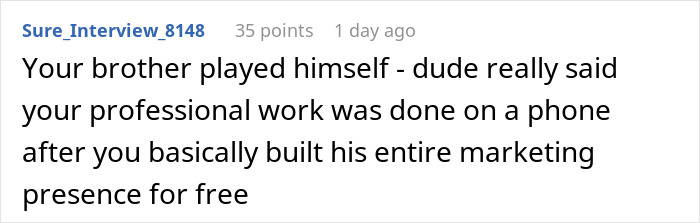
The issue escalates when the recipient of the labor begins to devalue the work to protect their own ego or to justify the lack of payment. By claiming a professional production is merely someone playing on a phone, the entitled individual attempts to minimize the sacrifice involved. This psychological defense mechanism allows the person to avoid feeling guilty for taking advantage of a loved one. Researchers suggest that mixing family and business requires clear contracts and mutual respect to prevent these exact types of misunderstandings. Without these guardrails, the person providing the free service often ends up feeling invisible and exploited. The moment a professional finally sets a boundary or sends an invoice, the entitled party usually reacts with defensive anger because their easy access to free labor is being challenged. They may use phrases like family does not charge family to manipulate the situation and regain control.
This specific type of gaslighting is common when a family member refuses to acknowledge the overhead costs of a creative career. Professional equipment, software subscriptions, and years of education represent a significant investment that the business owner is happy to benefit from while simultaneously mocking the process. By reducing a complex skill set to something that is done on a phone, the sibling is attempting to strip the work of its market value. This ensures they do not have to feel like they owe a debt of gratitude or money. Researchers at Verywell Mind noted that setting boundaries with family can be incredibly difficult because of the shared history and the pressure to be selfless. However, selflessness should not be a requirement for a sibling to be treated with dignity.
When a person decides to stop being an unpaid resource, the fallout can be explosive because it shifts the power dynamic. The entitled person has spent years feeling superior because they were receiving a gift they did not have to earn. When that gift is removed, they feel as though something has been stolen from them. This highlights the reality that the support was never a mutual exchange. It was a one way street where one person gave their professional expertise while the other gave nothing but criticism.
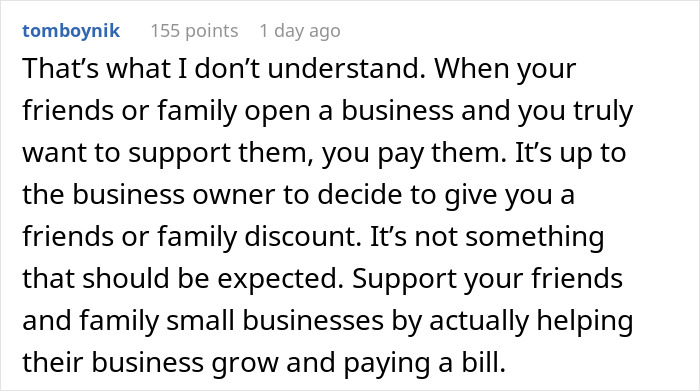
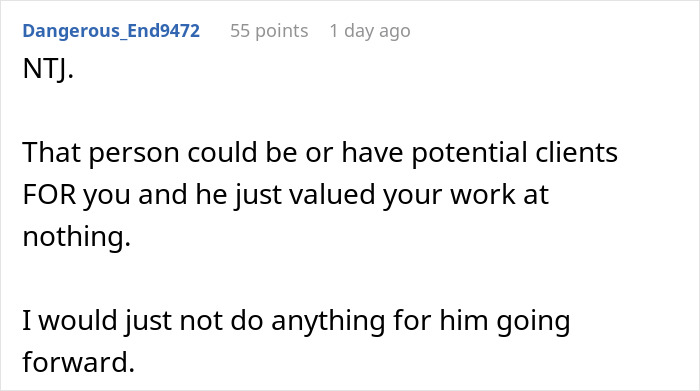
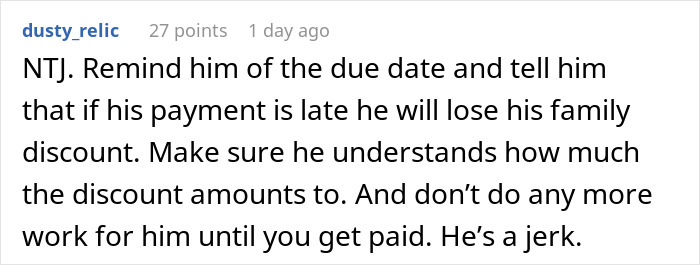
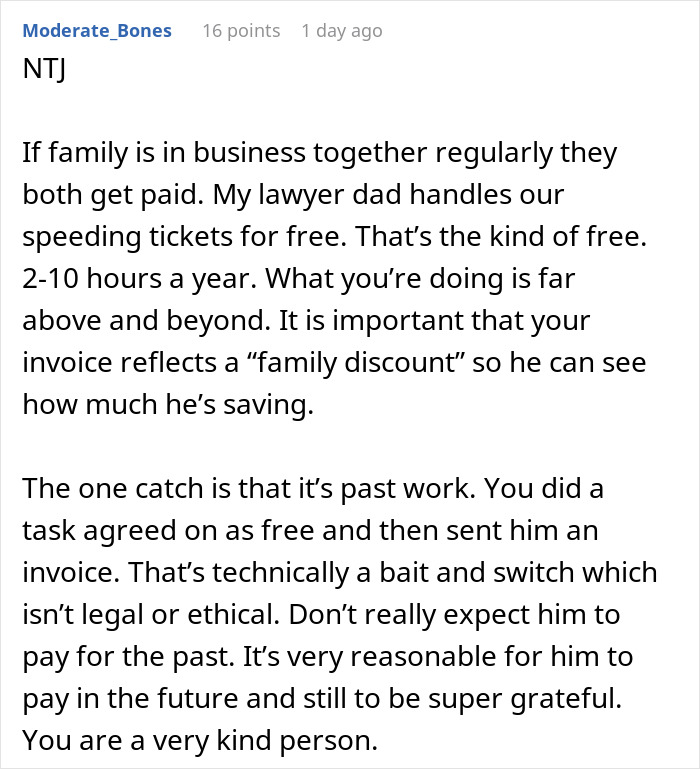
Moving forward requires the business owner to realize that professional support is not a birthright. If they want the benefits of a professional marketing strategy, they must be willing to respect the person behind the lens. The transition to a paid relationship is not an act of aggression but an act of self preservation for the creative professional. It forces the family to recognize that while love is free, labor is not. This realization is often the only path toward a healthy and balanced adult relationship where both parties are valued for what they bring to the table.







By entering your email and clicking Subscribe, you're agreeing to let us send you customized marketing messages about us and our advertising partners. You are also agreeing to our Privacy Policy.
Thank you! You've successfully subscribed to newsletters!





























 No fees, cancel anytime






33
0