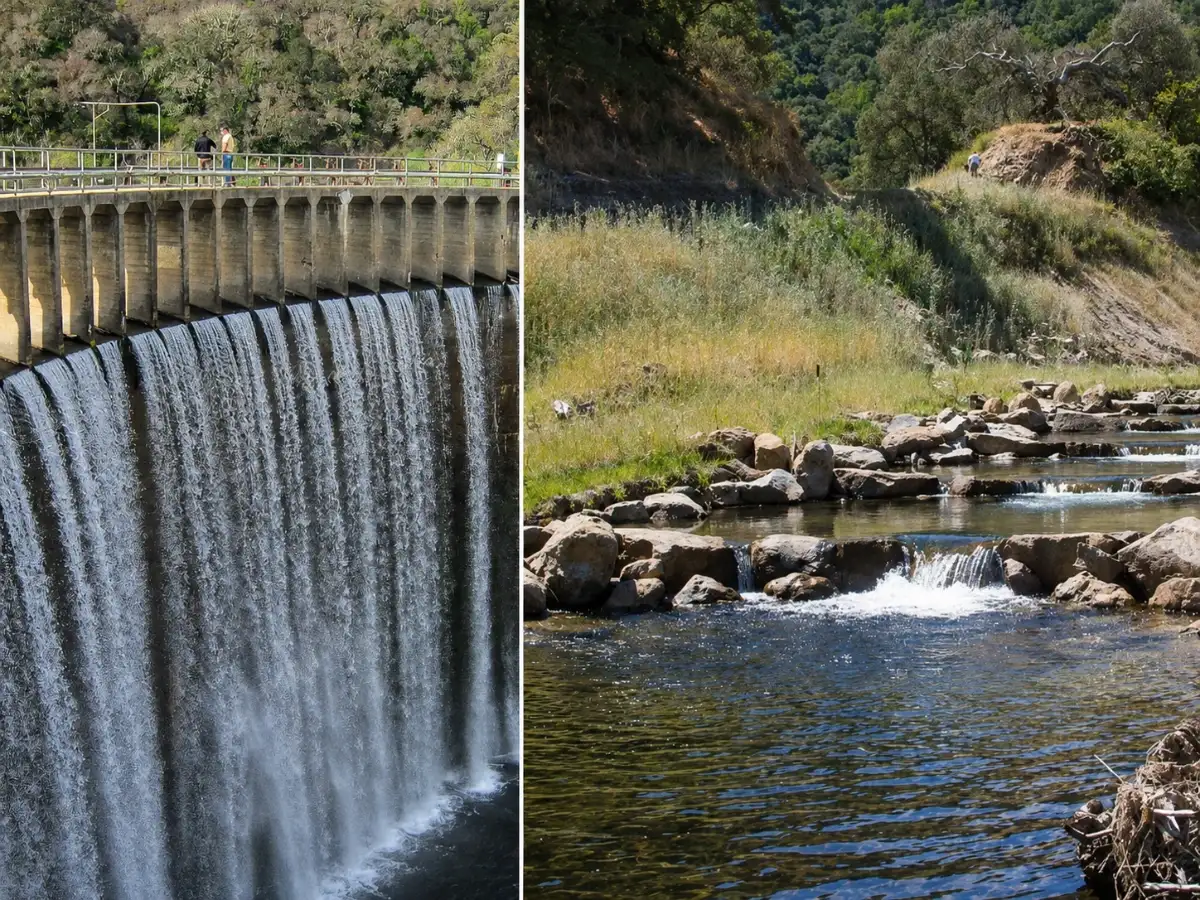
For nearly a century, a 106-foot concrete barrier kept one of California’s most resilient fish from reaching its spawning grounds. Crews began rerouting the river in the summer of 2013, and over roughly two and a half years, finishing in November 2015, they dismantled the dam piece by piece. A 2023 study titled ‘Six years of fluvial response to a large dam removal on the Carmel River, California, USA’ published in Earth Surface Processes and Landforms tracked the river for eight years, six of them after dam removal, and found that the dam removal did not trigger major downstream damage.
A dam built for growth, not for fish
The San Clemente Dam was constructed by Samuel Morse’s Del Monte Properties Company between 1918 and 1921 to provide water to the expanding Monterey Peninsula. It did that job for decades, but it was never good at allowing fish through. The 106-foot-tall dam sat at the confluence of the Carmel River and San Clemente Creek, blocking access to about 25 miles of upstream spawning habitat for steelhead trout, which migrate to the ocean and back to freshwater to spawn. KQED reported that the project has seen steelhead numbers on the Carmel River drop from about 1,350 fish in 1965 to just 249 in 2013, the last year the dam supplied water. The aging structure had been flagged as a serious earthquake risk by state dam safety regulators since the early 1990s.
Why it finally came down
By 2002, KQED noted, the dam’s reservoir was already about 90 percent full of silt, leaving almost no space for storage. There was little point in repairing a dam that could no longer hold water and might fail in an earthquake. Retrofitting the structure would have cost an estimated 49 million dollars, the outlet reported, but tearing it down instead cost about 84 million dollars, since a retrofit would only have addressed the earthquake risk while leaving the sediment buildup and blocked fish passage unresolved.
Engineers couldn't just blow up the dam and let a century of trapped sediment wash downstream. That much loose rock and dirt, nearly 2.5 million cubic yards, could have buried homes and habitat below, as NOAA Fisheries explained. Beginning in the summer of 2013, crews rerouted half a mile of the Carmel River into the adjacent streambed of San Clemente Creek, redirecting the river's main flow around the old dam and reservoir site rather than through it, then dismantled the dam piece by piece over the three-year project NOAA describes. It was, at the time, the largest dam removal in California.