NEW DELHI: The fragile ceasefire between the United States and Iran collapsed after both sides exchanged fresh military strikes following an attack on a commercial oil tanker in the Strait of Hormuz. The latest escalation comes just two weeks after Washington and Tehran signed an interim agreement to end four months of fighting.
Get breaking news anytime, anywhere. Download the TOI app now!
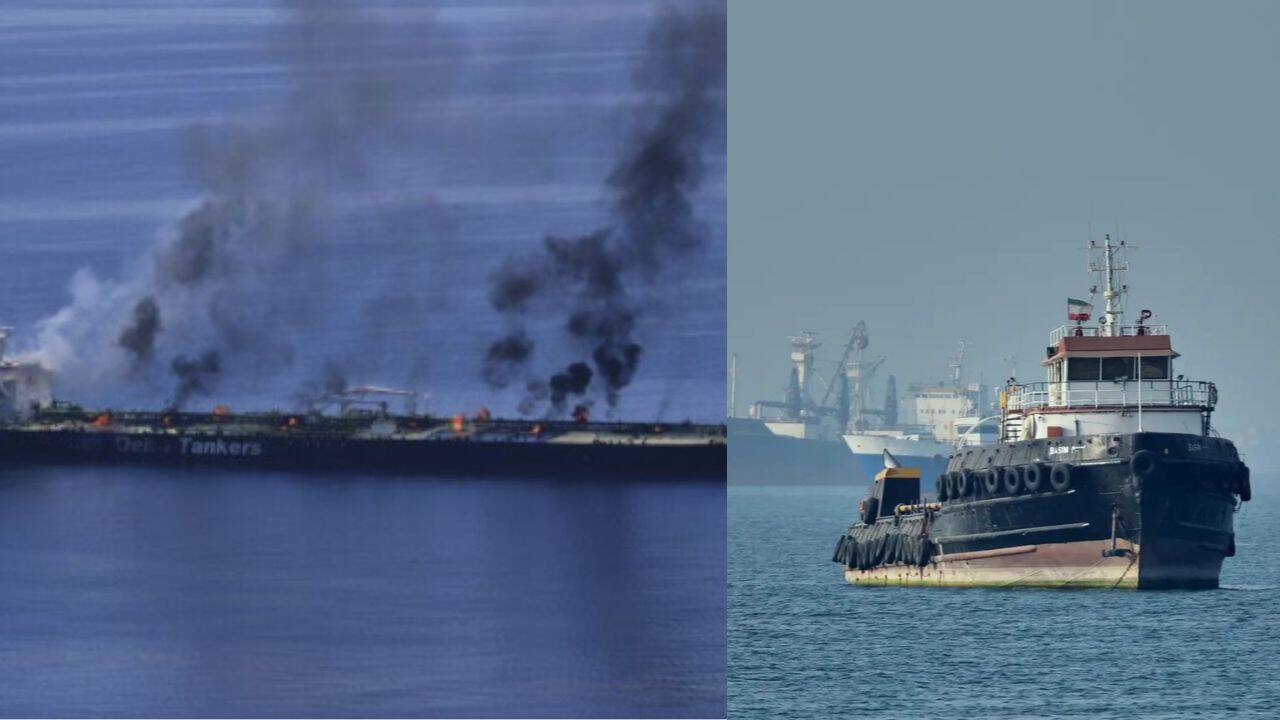
The US said it launched fresh strikes on Iranian military infrastructure after accusing Tehran of using a drone to attack a Panama-flagged tanker carrying more than two million barrels of crude oil.
Iran denied violating the agreement, retaliated by launching ballistic missiles and drones at US military bases in Bahrain and Kuwait, and warned of a stronger response if Washington continued its attacks. The Islamic Revolutionary Guard Corps (IRGC) said the strikes were carried out in retaliation for the latest US attacks.
Top developments
US launches fresh strikes after tanker attack
The United States carried out a fresh wave of strikes on Iranian military targets after a Panama-flagged tanker was hit by an Iranian drone near the Strait of Hormuz. According to US Central Command (CENTCOM), the strikes targeted Iran's military surveillance systems, communications infrastructure, air defence sites, drone storage facilities and mine-laying capabilities. Washington said the operation was a direct response to continued Iranian attacks on commercial shipping.
Iran retaliates with missile and drone attacks
Iran responded by launching ballistic missiles and drones at US military facilities in the Gulf, including the Ali Al Salem Air Base in Kuwait and the US Fifth Fleet headquarters in Bahrain. The Islamic Revolutionary Guard Corps (IRGC) said the attacks were a response to recent American strikes and warned that any further "enemy aggression" would be met with a "crushing response."
Bahrain and Kuwait activate emergency measures
Bahrain sounded nationwide warning sirens and urged residents to move to the nearest safe location after reporting Iranian drone activity. Kuwait activated its air defence systems in response to what it described as "hostile missile and drone threats" as tensions spread across the Gulf.
Trump warns Iran of more military action
US President Donald Trump confirmed the latest American strikes, accusing Iran of repeatedly violating the ceasefire agreement. In a Truth Social post, Trump warned that Washington could escalate its military campaign if Tehran continued its actions, saying the US would be "forced to militarily complete the job" if Iran failed to honour the agreement.
Explosions reported in southern Iran
Iranian state broadcaster IRIB reported explosions in the southern coastal city of Sirik shortly after the US strikes. State media also reported projectiles hitting a village on Qeshm Island in the Strait of Hormuz, though authorities did not immediately provide details on casualties or damage.
Oil tanker damaged in Strait of Hormuz
The latest escalation began after an Iranian drone struck the Panama-flagged tanker M/T Kiku, carrying more than two million barrels of crude oil through the Strait of Hormuz. Britain's UK Maritime Trade Operations (UKMTO) said the vessel's bridge sustained damage, but all crew members were safe. Maritime authorities subsequently raised the regional security threat level.
Iran tightens control over Strait of Hormuz
Iranian state media said Revolutionary Guards fired warning shots at vessels using shipping channels not approved by Tehran and claimed more ships were now seeking Iranian permission before transiting the strategic waterway. Iranian officials reiterated that vessels must comply with Tehran's shipping instructions or face action.
Both sides accuse each other of violating ceasefire
Washington said Iran breached the interim memorandum by attacking commercial shipping, while Tehran accused the US of violating the agreement through fresh military strikes and failing to uphold commitments linked to regional conflicts, including Lebanon.
Israel-Lebanon deal comes under pressure
The renewed US-Iran confrontation came a day after Israel and Lebanon signed a US-backed framework agreement aimed at ending months of hostilities. Despite the deal, Israeli strikes continued in southern Lebanon, while Hezbollah leader Naim Qassem rejected the agreement as "null and void." Israeli Prime Minister Benjamin Netanyahu defended the framework, saying Israel would retain its security zone until Hezbollah is disarmed.
Regional tensions rise again
The latest exchange has renewed fears of a wider conflict across West Asia, with Bahrain condemning Iranian drone attacks and Iran accusing Washington of destabilising the region. The escalation has once again raised concerns over the security of global energy supplies passing through the Strait of Hormuz.