- Musk’s Terafab aims to outproduce global chip output by fifty times
- Recursive manufacturing promises speed while leaving technical details unclear
- New physics claims remain undefined despite strong confidence from Musk
Elon Musk has revealed plans for a massive expansion in computing capacity through a new facility called Terafab in Austin, Texas.
The plant aims to generate one terawatt of computing power annually, dwarfing the current global output from chipmakers, which stands at around 20 gigawatts each year.
Musk declared Tesla, SpaceX, and xAI will collaborate to achieve this scale, producing chips versatile enough for various applications, including lithography masks.
A production system focused on speed and iteration
The Terafab initiative relies on a recursive manufacturing process that enables swift chip production alongside iterative redesigns for better performance.
Musk refers to "some very interesting new physics" that underpins this approach, expressing confidence in its viability even if timelines remain unclear.
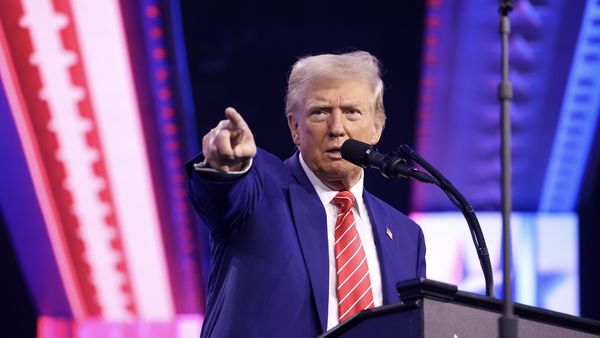
"We are going to push the limits of physics in compute and do some wild and crazy things," Musk said during a recent presentation.
Two primary chip types emerge from this effort: one optimized for inference tasks on Earth.
The former will primarily power humanoid robots projected to reach sales volumes between one billion and ten billion units yearly, and the latter is designed for space-based computers in satellites, starting at 100 kilowatts per unit and scaling to megawatt levels over time.
Musk anticipates robots could eventually outnumber humans within a single year at peak production rates, raising questions about feasibility given resource constraints.
In space, satellites equipped with these chips demand enormous launch volumes; Musk's calculations point to deploying 10 million tons of material annually, including compute hardware, solar arrays, and support structures.
Such ambitions necessitate a larger Starship variant capable of hauling 200 tons per flight - yet basic arithmetic indicates a requirement for roughly 50,000 launches yearly, or 135 daily, to meet the terawatt target.
Such activity amplifies vulnerabilities, including helium disruptions that already hinder semiconductor fabs by 30% due to the U.S.-Israel war in Iran.
Elon Musk did not provide a roadmap for sourcing amid these shortages, and his track record invites scrutiny; recall Musk’s one million self-driving Tesla taxis? It yielded merely 200 test units.
SpaceX faces delays too, with Starship V3 launches postponed even as boosters prepare for action.
However, Musk counters skepticism by recalling how Tesla's electric vehicles and SpaceX's reusable rockets overcame early doubts about viability and cost-effectiveness.
"I think it's important to consider the grandness of the universe and what we can do that is much greater than what we've done before, as opposed to worrying about sort of small squabbles on Earth," he remarked to an enthusiastic crowd.