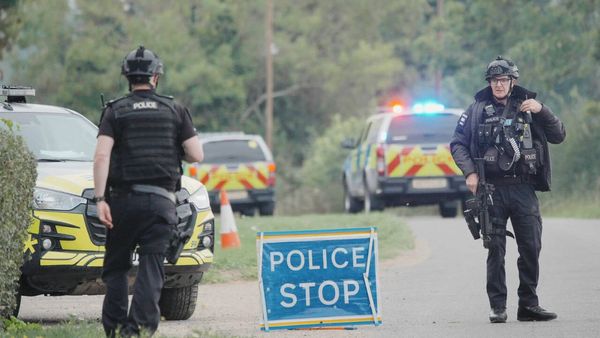

There was disappointment, unhappiness and no little anger when the Central Region FA announced that all Fun 4 matches in the Falkirk area had been cancelled last month due to a violent incident on the opening weekend of the new season.
Parents of the 750 kids who were due to take part were certainly shocked when they learned that a coach had headbutted another man on the sidelines during a small-sided match involving boys and girls who were just six and seven.
But many of them demanded to know why so many should pay the price for the mindlessness of one imbecile?
Scott Robertson, the president of Musselburgh Windsor and the chairman of the Scottish Youth Football Association (SYFA), could appreciate why they were so upset.
At the same time, though, he could also understand why such drastic action was taken.
Read more:
- Hearts manager expects Calvin Miller to be in frame for Scotland call from compatriot
- Hearts duo James Wilson and Josh McPake boost Scotland call-up chances in Hibs win
- Ex-SFA CEO puts league reconstruction and B teams back on agenda ahead of club summit
For Robertson, and many others who are involved in the running of the Scottish grassroots game, abuse, threats, intimidation, bullying, racism, misogyny, sectarianism and violence are reaching worrying levels in kids’ football in this country. He believes a zero tolerance approach now needs to be taken.
“Everybody talked about the effect the cancellation had on the kids and I do get that,” he said. “People were saying, ‘Why should the kids suffer? It isn’t fair! They didn’t do anything wrong!’ I definitely do get all that.
“But what people forget is the guy who runs the event does it on his own. He's isolated, he hasn’t got any back-up. He has no support from his local FA, the SFA or the SYFA on the day. When people aren't happy, as is often the case, he's the solitary target.
“He’s been abused and even manhandled before. People forget the emotional impact that sort of behaviour has on volunteers. There is a mental health aspect to it. Maybe he thinks, ‘Do I really want to put myself in that position again?’
“Yeah, the kids missed out. But it definitely sent out a very strong message. You have to hope that parents start self-policing now and people will behave better. Because if the organiser stops doing it who is going to step in? Who is going to spend the whole day being challenged, questioned and confronted by angry parents and coaches then?”

The Grassroots Football Report 2026 which was published by sports equipment manufacturer FORZA – who approached players, coaches and secretaries across the United Kingdom for their views – this month underlines just how serious the deterioration in conduct in boys’ and girls’ football has been.
The survey found that:
- 90 per cent of respondents had witnessed abuse of a referee.
- 68 per cent of those who replied felt parents and spectators were to blame.
- 21 per cent of clubs have cancelled games because of a shortage of match officials.
- 79 per cent believe recruiting volunteers is now far harder.
So what has been responsible for the sharp rise in incidences of verbal and physical abuse in age-group football? And what, perhaps more importantly, can be done to create a healthy and safe environment for youngsters to enjoy the sport in again?
Tam Smith is the club leader at Hutchison Vale – the renowned Edinburgh institution which has produced over 30 Scotland internationalists, including John Collins, Darren Fletcher and Kenny Miller in modern times, since being formed in 1940 – and has been coaching kids for 48 years now.
The former police officer and care worker has detected a definite decline in the standard of behaviour on the pitch and on the sidelines during the past few seasons. He believes the sad and steady demise of schools football coupled with the rise of the pro-youth set-up has played a major part in the disturbing trend.
Read more:
- The bereaved fathers football team and a fight for Scotland-wide child loss support
- Hamilton fans to get 'golden share' power to block move away from New Douglas Park
- Why Celtic and Rangers got the same punishment - and should both be thanking the SFA
“It is an issue, a big issue,” he said. “I actually agreed with the Fun 4s suspension in Falkirk because it has really raised the profile of the problem. Yes, kids missed out, but it was a timely reminder of what could happen if this goes on.
“In my opinion, school football has been sacrificed at the altar of pro-youth football. And for me school football is incredibly important to children. A big part of a kid's life is mixing with their peers away from school through sport.
“A lot of parents take teams now. But teachers are professionally trained to deal with children, parents aren’t. So who is better placed to look after them when they take part in these extracurricular activities?
“I have a daughter who is a teacher and she wasn’t allowed to take a class by herself until she was in the third year of her training and even then it was under supervision. But we allow any Tom, Dick or Harry to take charge of a football team because they think they know about football.
“They do their SFA 1.1 or 1.2 badges and all of a sudden they start advertising themselves as fully qualified coaches. It’s nonsense. For me, the most important part has been missed. What's most important is that they understand children.

“It's only right you have some sort of coaching qualification before you start working with kids of course. But the key component that's missing is the psychometric part of it. Does this person display the right type of behaviour to be dealing with kids? It's not just about teaching them football, it's about teaching them respect, manners, and self-discipline.
“Somebody said to me years ago, ‘The problem with Scottish football is the players are better players than the coaches are coaches’. That's very true. Do they really care? I don't think they care enough about the kids. That's criminal when you're working with children.”
Smith continued, “The commercialisation of football has led to more competition among young people wishing to make a career in the game. Many parents are walking in their kid’s shoes. They should let them walk in their own shoes.
“But the ambition of the parent has superseded the kid enjoying their football for me. Having fun doesn’t matter any more. What matters now is if the team won, if their kid got the ball enough.
“Parents have a driving ambition for their kids to be the next big thing. It doesn’t matter if you say to them, ‘Only 0.4 per cent of kids playing in Scotland now are going to make a career out of this’. They still think their kid is the one.
“You see a lot of bickering at games and a lack of acceptance of decisions made by the poor unfortunate person in the middle of the park now. You get young referees of 18 and 19 who are starting out getting abused. Some of them don’t come back because of all the nonsense. They're getting screamed at because they never gave a free kick. At the end of the day, we've got to remember they're children.
Read more:
- Why Scotland's clubs lag behind their English rivals at integrating refugee talent
- How ex-Celt Brian McLaughlin helped to end Scottish football's 'inferiority complex'
- Inside the new Scotland manager's 'miracle' Monaco reign and the reason he got sacked
“Every mum and dad wants their kid to be the best. If you take a kid off to give someone else a game their mother or father come over and have a go at you. They’ll say, ‘What are you doing that for?’ Kids see this. They are being taught to hate and when you are taught to hate it perpetuates these issues.”
Robertson has been a coach and volunteer with Musselburgh Windsor for 40 years and also feels the Club Academy Scotland system – which was introduced by the SFA in 2012 in an attempt to develop more technically, tactically and physically proficient young Scottish footballers – has had an indirect affect on parent conduct.
“It is important to stress we are talking about a minority here,” he said. “Most events, and there's probably thousands every weekend, pass off without any problem. You only tend to hear about the bad events. That said, I do think behaviour is becoming more of a problem.
“You've got to ask, ‘What drives these people to behave like this at Fun 4s? It's a meaningless kickabout. Why is somebody getting so excited they feel they need to headbutt or punch someone? What's driving that mentality?’ I've been asking myself that a lot.
“Remember, we're talking about six and seven year olds. At that age group, they play four v four with mini goals. It's non-competitive, nobody keeps the score, there are no winners or losers, there are no trophies or medals, it doesn’t count towards a league. It's meant to be Fun 4s. The clue is on the tin.
“But I feel that parents, more than ever before, have this laser-like focus on making sure their child is scouted by a professional club. The kids talk about it, the parents talk about it.

“Premiership clubs do contact SYFA clubs. I get letters at Musselburgh Windsor saying, ‘We've identified that Johnny has ability beyond his peers’. The boy can be six or seven. You then see a photo of them on social media signing a bit of paper with the branded backdrop behind them. The dad tells you, ‘My son’s got a contract’. It’s ridiculous.
“But there is a feeling that if your kid doesn't get in to the Club Academy Scotland set-up at that age then they're not going to become a professional footballer. It has created a certain environment.
“Every weekend, somebody somewhere is watching their seven-year-old play and saying, ‘That decision went against him! He's not going to get picked up! He’s not playing in the position he should be! Why did you take him off? Hibs might be here!’ So parents start to get angry.
“When kids are playing Fun 4s at six or seven they should be moving around and playing in different positions. But a father will often go up to a coach and say, ‘My son’s a right-back! He needs to play at right-back!’ For us, he needs to play everywhere and develop different skills.
“One of our coaches contacted me a while back and told me that a parent had confronted them because their daughter wasn’t playing. The coach said, ‘I'm physically shaking here! This father has just come up in my face and gone off his head’. But he thinks he's got the right to say his piece.”
Read more:
- Ian Maxwell on SFA 'problem' and why Pocoball will get Scotland fans on their feet
- Call to increase funding for refugee football - and boost Scotland's World Cup hopes
- He plays Total Football: Why the SFA appointed ‘the Belgian Simeone’ Scotland manager
Fergus Reid, a coach and committee member at Giffnock Soccer Centre in Glasgow, has been involved with the Glasgow club for the past nine years and he has been both appalled and concerned by some of the ugly scenes he has witnessed on match days.
“It's definitely a problem,” he said. “I played football in Ayrshire when I was a boy and this sort of thing was a problem back then. When I started coaching I naively thought it would have improved. If anything, though, it's got worse.
“Aggression levels are rising. Parents who stand on the sidelines feel they can berate players and the referee without any consequences. I've coached hundreds of boys now and have seen the impact it has on them both emotionally and on their confidence.
“One of my teams was down at a football festival in Ayr his summer and there was a massive brawl on the park involving parents and coaches. There is video footage of it online. You can see youngsters standing open-mouthed as the fighting breaks out and people wade in.
“I'm fortunate that I've got a really good group of parents. But I'm very clear that their role is to support the kids and not to coach. I'm very strict. I'm also very clear with the kids that if they experience anything bad I'll quite happily walk on and stop a game.

“But we've got a real issue. Aggression from the touchline to players and coaches can be incredible. I've even seen instances of racism increasing I'm sorry to say. I've got quite a diverse squad of players and I’ve definitely noticed that.
“Disturbingly, I’ve seen abuse of young referees increasing. I’ve seen boys who are just starting out on that journey looking genuinely frightened. I would not put a lad of 16 in that environment.”
So what can be done? Should others follow the lead of the Central Region FA and cancel an entire round of fixtures to fire a warning shot across the bows of those who are unable to restrain themselves. Does it need the SFA, the SYFA, MSPs at Holyrood, Police Scotland even, to step up? Robertson, Reid and Smith all have different suggestions.
“I think parents need to stay outside the mesh fencing at astroturf pitches and put a bit of distance between themselves and the pitch and leave the kids to it,” said the former. “Creating that little bit of space would help. They can still see the child, but they’re removed a bit.
“Maybe a bit of an education needs to take place too. Somebody has to go to parents and say, ‘Look, by all means shoot for the stars and be ambitious for your child, but remember the reality is only half a per cent of kids make it. So don’t sacrifice your child's happiness playing a wonderful game with their pals because you think you're going to win the lottery’.”
Smith revealed that Hutchison Vale, like many youth football clubs across the country, have introduced their own disciplinary system for parents which has proved effective at silencing the touchline troublemakers.
Read more:
- It's a middle-class sport now: Rising costs are forcing migrant kids out of football
- Brexit stopping Scottish football clubs tapping into refugee talent like Euro rivals
- The system is broken: David Duke on why Street Soccer Scotland offer refugees hope
“If a player fouls another player on the pitch they get a card,” he said. “Adults should get a card if they misbehave as well. We introduced a conduct form for parents and associated adults four years ago. We also have a traffic light system.
“It's called Hutchison Vale Parent and Associated Adults Conduct Policy. The committee can issue green cards, yellow cards and red cards. Adults can be suspended from attending games. In the most serious cases, the child has to go and play somewhere else.
“We are always saying, ‘It's the kid's game so let them play for goodness sake’. if your mood on a Sunday night depends on the result of an under-10s seven-a-side football game then you've got a serious problem and you need to stop coming.”
MSPs at Holyrood have pledged to change the wording of the Police, Public Order and Criminal Justice (Scotland) Act 2006 and increase the reach of Football Banning Orders (FBO) after a rise in pyrotechnic use, missile throwing, offensive chanting and pitch invasions in the professional and semi-professional game.
One coach who takes an under-15 team in the Aberdeen area, who requested anonymity, argued that FBOs could be used to punish the worst offenders in kids’ football as well.
“It happens everywhere,” he said. “I think there are a few factors. It is cultural, social, behavioural. I have seen middle-class parents act like total thugs. A woman who is a guidance teacher, someone who has a respectable job with some responsibility, gave my wife the middle finger at one game.

“People often ask me about going in to coaching and I always say, ‘Don’t even bother’. Parents can ruin a team. They form cliques, gang up on coaches and stage mutinies to force them out. The atmosphere on the sidelines can become quite toxic. In the worst cases, parents can get expelled from the club which is to the detriment of their kid.
“I think a lot of parents see the money that is involved in football now and think, ‘My son is going to be the next Messi!’ Up here in Aberdeen it can be very cutthroat because there is only really one professional team. In the Central Belt there are several.
“Could the Scottish government look at it? If you are a fan of a Premiership club and you do something stupid at a game you get banned, you’re not allowed back in. But if you do something stupid at a kids match nothing happens. Could the same action be taken? It might seem quite extreme, but it might help to quell it.”
Reid recognises the SFA run their Let Them Play and Let Them Ref campaigns – which use tool kits and videos to showcase good sideline practice, encourage a welcoming environment and champion respect for match officials.
However, he would still like more organisations to get involved and an even greater attempt made to raise the profile of the issues which so many clubs are dealing with.
Read more:
- SFA unveil bold new proposals to encourage greater game-time for youth prospects
- Derek McInnes on Rangers' transfer window and how Nico Raskin reacted to staying
- Ban on away fans for Celtic-Rangers 2026/27 clashes, SPFL confirm in statement
“For me, there needs to be a multi-agency campaign involving regional associations, the SYFA, the SFA and the Scottish government, a campaign that is very prescriptive about what the code of conduct is,” he said. “The SFA run a digital campaign so credit to them for that, but there needs to be a lot more done and it needs to be sustained.
“I think we have started to think about youth football purely in elite terms. But 80,000 kids are playing just for fun across Scotland every weekend so how about looking after them? I think the football community’s priorities have got way out of sync.
“We had Maree Todd, the sport minister, down at our club in Giffnock last week. We told her that in our view community football is the biggest untapped force for social good in Scotland.
“We run a football charity. We run a big empowerment camp and use football to boost confidence and self-esteem amongst girls. I've had boys from the age of five up to 16 and have seen them grow in maturity through teamwork. Youth football can be a massive agent of change. I’m pretty cynical by nature, but I've witnessed it first hand.
“I think we should all stop talking about elite players when we talk about youth. I think we need to value grassroots. I also think we really need to get back to what matters – kids playing football with their mates and enjoying themselves.”