



For photographer and creative director Julia Buruleva, traveling is more than a way to discover new places. It has become the foundation of an ongoing artistic practice. Through her project Art Expedition, she moves from country to country, spending extended periods in each destination and transforming what she encounters into carefully staged, site-specific photographs. Rather than arriving with a fixed visual formula, Buruleva allows each location to shape the work. Architecture, landscapes, local colors, light, materials, and cultural references can all become part of a composition.
The resulting images move freely between surreal portraiture, installation, performance, and fashion-inspired photography, placing unexpected figures and objects within environments that remain unmistakably connected to the places where they were created. The elaborate scenes may look as though they belong to an invented world, but their construction is firmly rooted in reality. Buruleva creates the images physically on location, using real sets, costumes, props, landscapes, and people rather than relying on AI or digitally fabricated environments. Local participants sometimes become collaborators, helping her build poetic scenes that blur the boundary between what is observed and what is imagined. Slow travel is central to the idea behind Art Expedition. Instead of briefly passing through a destination, Buruleva aims to stay long enough to develop a larger body of work, eventually gathering material for books dedicated to individual places, as well as videos documenting the locations, people, and production behind the photographs.
Scroll down to explore her project and see how landscapes around the world become stages for her surreal visual stories.
#1
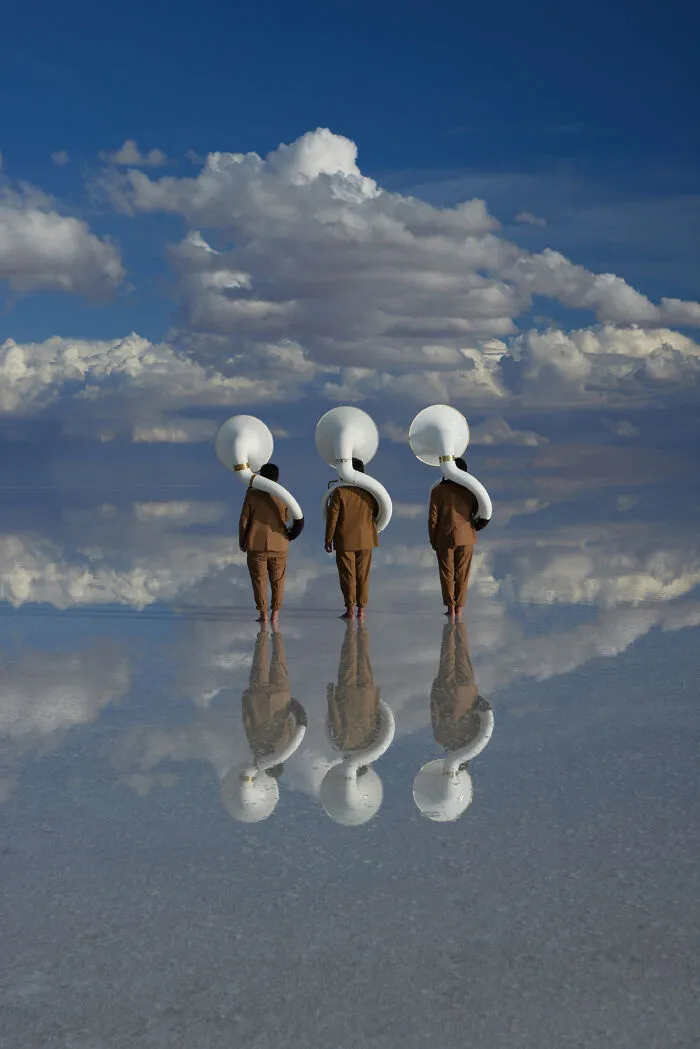
“This photograph was created during my photography expedition to Bolivia, at the Uyuni Salt Flats - a vast desert covered with a thin layer of water. In Bolivia, I was struck by the carnival - its colors, faces, and gestures. Among the crowd, I noticed a group of trumpet players with huge shining instruments. I invited three of them to the salt flats near the village, where the landscape gave their presence an otherworldly and surreal feeling.”
Report
11points
#2
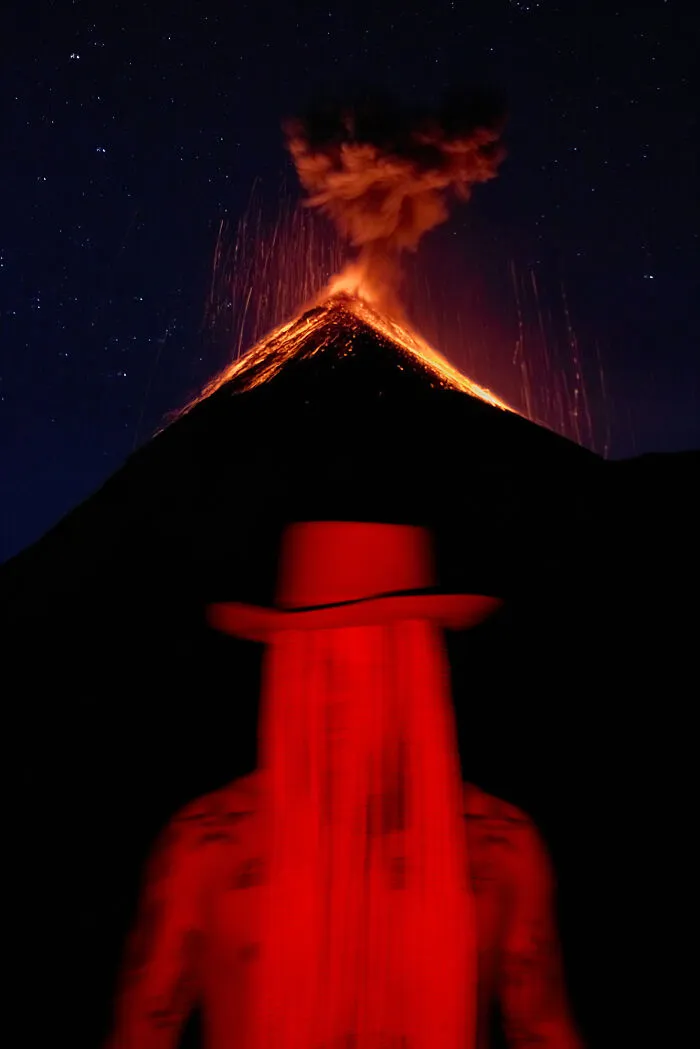
“This image was created in Guatemala as part of my “Art Expedition,” during a night shoot with Volcán de Fuego erupting in the background.
I invited the mountain guide who accompanied us on the expedition to become my model. I wanted a strong, rugged Guatemalan man — someone whose physical presence could convey the raw power and spirit of the volcano.
I lit him entirely in red, connecting his figure visually with the lava and fire behind him. The movement of the long exposure adds to this feeling, making the figure almost dissolve into the darkness of the volcanic landscape.
The image was photographed during a real eruption, with a real location and a real model — NO AI.”
Report
11points
#3
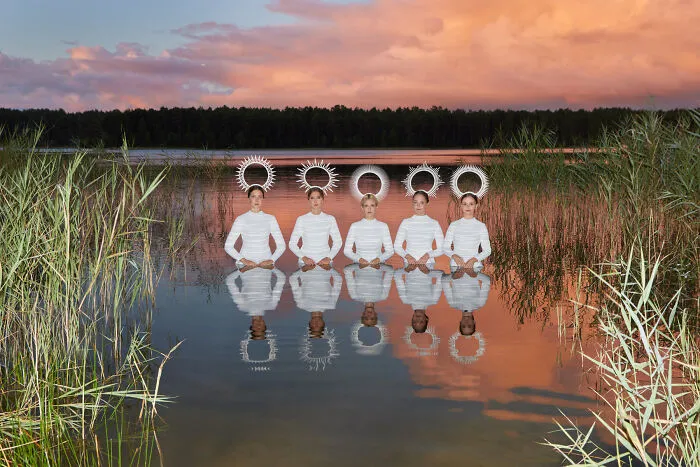
“In Latvia, I was fascinated by the country’s deep connection to nature and its living pagan traditions. I wanted to create a scene that reflected this spirit - something between a ritual and a dream.
I searched for a local folk band TAUTUMEITAS and found one willing to take part in the project. We met before dawn and went to a forest lake, where the water was perfectly still. Through this image, I wanted to capture that moment when human presence becomes part of the landscape - when music, nature, and ritual merge into one quiet act of unity.”
I searched for a local folk band TAUTUMEITAS and found one willing to take part in the project. We met before dawn and went to a forest lake, where the water was perfectly still. Through this image, I wanted to capture that moment when human presence becomes part of the landscape - when music, nature, and ritual merge into one quiet act of unity.”
Report
11points
#4
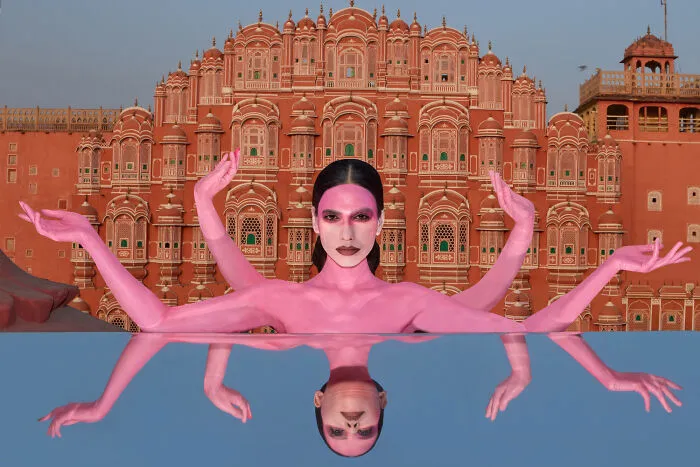
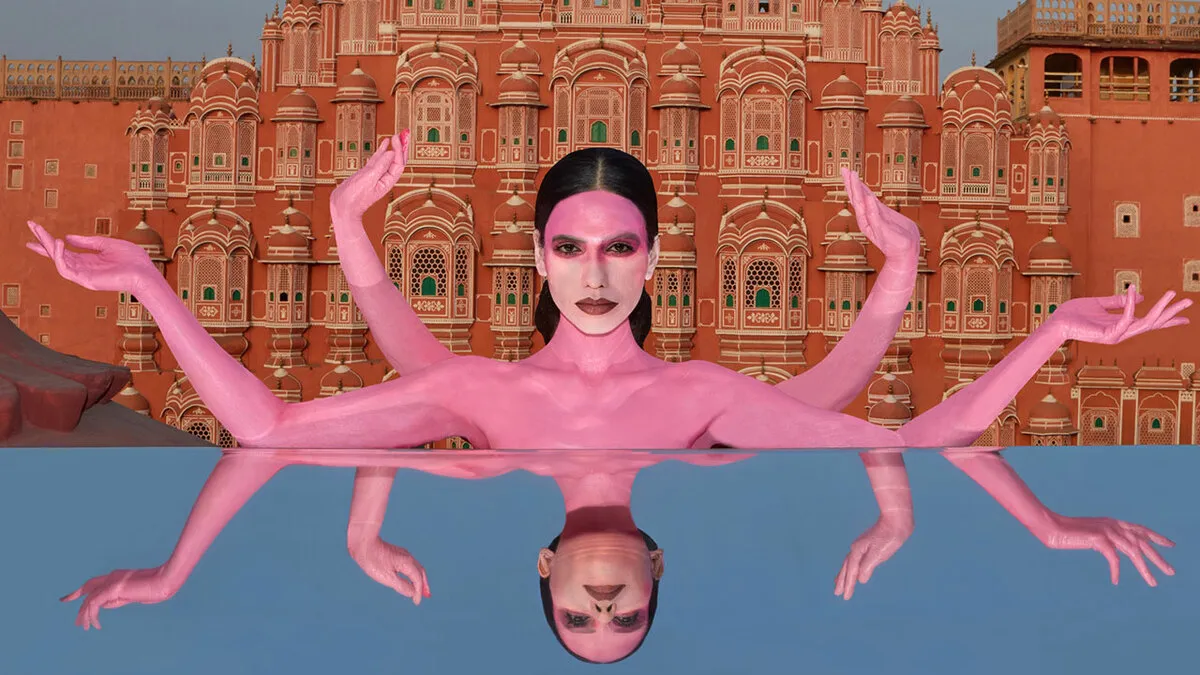
“Pink City
I spent six weeks in Jaipur, immersing myself in the spirit and visual language of the Pink City. I wanted to create my own interpretation of the multi-armed divine figures deeply rooted in Indian visual culture, transforming the human body into something beyond the ordinary.
For the shoot, I used two models and a large mirror to create the illusion of a single multi-armed figure. Hawa Mahal, Jaipur’s most iconic palace and one of the city’s defining symbols, became an essential part of this visual narrative.
The entire image was created through a real-life production with real models, a real location, body painting and a physical mirror — NO AI.”
Report
10points
#6
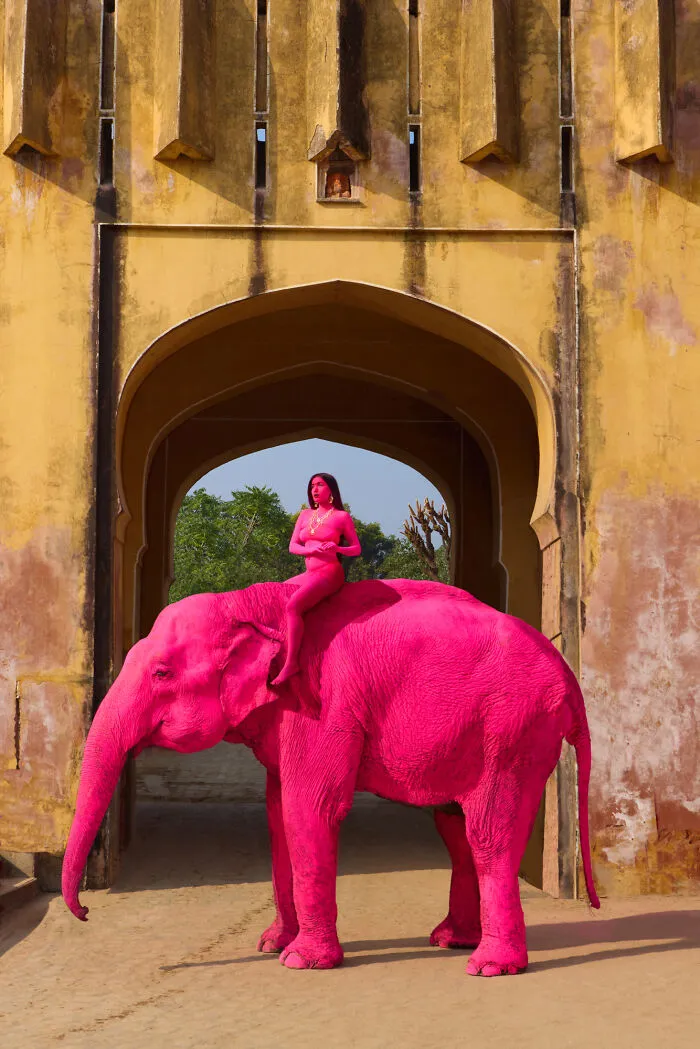
Location: Jaipur, India
“For this work, I painted an elephant and the model in pink and placed them within a historic Rajasthani architectural site.
The background is built on typical stepped architecture, widely used in Rajasthan and directly associated with utilitarian and ceremonial spaces. The pink elephant refers to the local tradition of painting elephants for festivals, a practice still common in Rajasthan. The pink color functions as a cultural and symbolic reference - it is both the traditional base color used in elephant body painting and a direct reference to Jaipur as the “Pink City.”
The work is constructed through minimal elements: a single location, a limited color palette, and direct use of existing local cultural practices, without fictional additions.”
The background is built on typical stepped architecture, widely used in Rajasthan and directly associated with utilitarian and ceremonial spaces. The pink elephant refers to the local tradition of painting elephants for festivals, a practice still common in Rajasthan. The pink color functions as a cultural and symbolic reference - it is both the traditional base color used in elephant body painting and a direct reference to Jaipur as the “Pink City.”
The work is constructed through minimal elements: a single location, a limited color palette, and direct use of existing local cultural practices, without fictional additions.”
Report
10points
#7
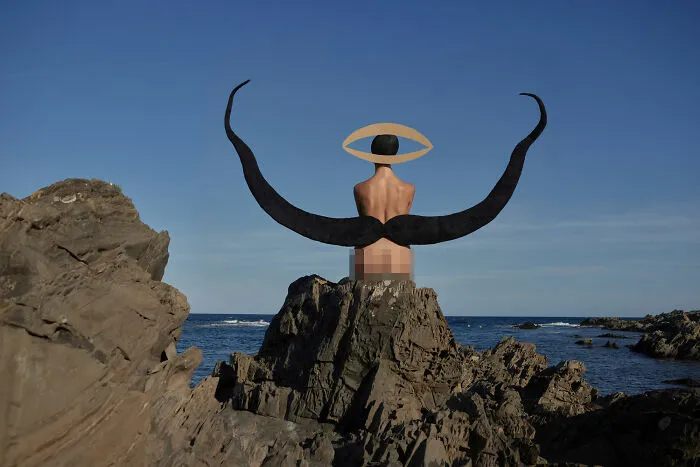
“This photograph is an homage to Philippe Halsman’s iconic portrait of Salvador Dalí. Inspired by its surreal energy, I transformed the female body into Dalí’s face. The image was created on the cliffs of Cadaqués, near Dalí’s former home - a place filled with his presence and influence. These very cliffs appear in many of his paintings. The work conceptually brings together landscape, portraiture, and historical reference into a single visual gesture.”
Report
10points
#8
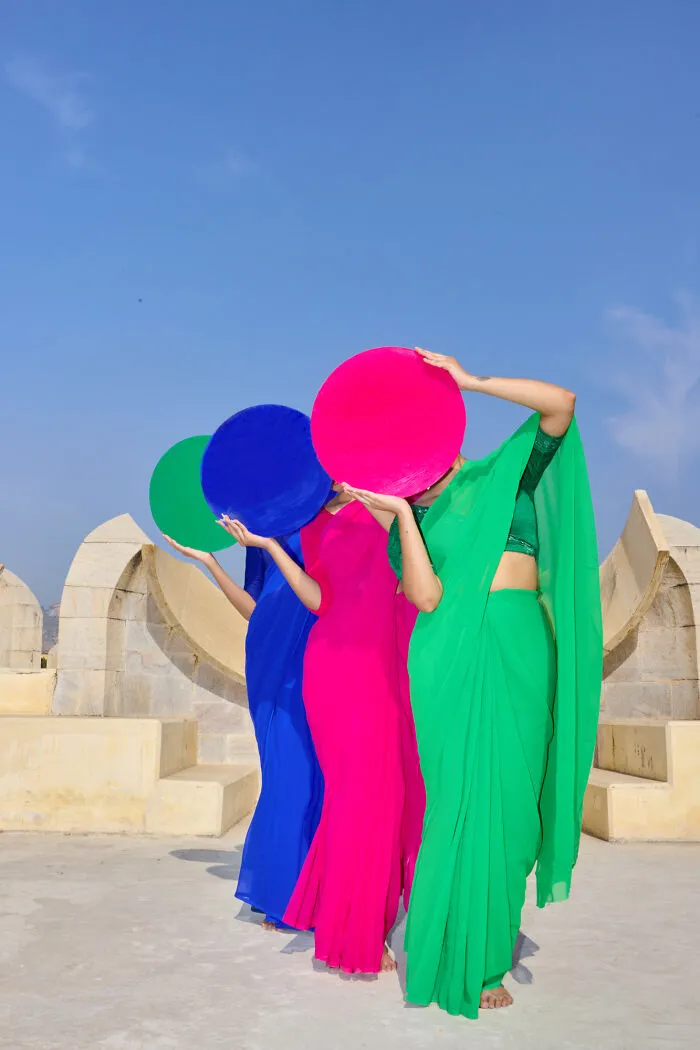
“I spent six weeks in Jaipur, in India, exploring the city, finding the most interesting locations and preparing several shoots, including this one. This work was created at the 18th-century astronomical observatory Jantar Mantar. This is Jantar Mantar, Jaipur — one of the most iconic places in the city.
It’s an 18th-century astronomical observatory. I walked through it for hours, observing and trying to understand its visual logic. I decided to work there with three women dressed in saris. Because I was in India - and this is what naturally belongs to this place. Here, color is not decoration. It’s part of everyday life and visual culture. The circles that cover their faces echo the curved lines of Jantar Mantar’s architecture. They also replace faces, removing individuality. I didn’t want facial expressions to pull attention away from the structure and rhythm of the image.”
It’s an 18th-century astronomical observatory. I walked through it for hours, observing and trying to understand its visual logic. I decided to work there with three women dressed in saris. Because I was in India - and this is what naturally belongs to this place. Here, color is not decoration. It’s part of everyday life and visual culture. The circles that cover their faces echo the curved lines of Jantar Mantar’s architecture. They also replace faces, removing individuality. I didn’t want facial expressions to pull attention away from the structure and rhythm of the image.”
Report
9points
#12
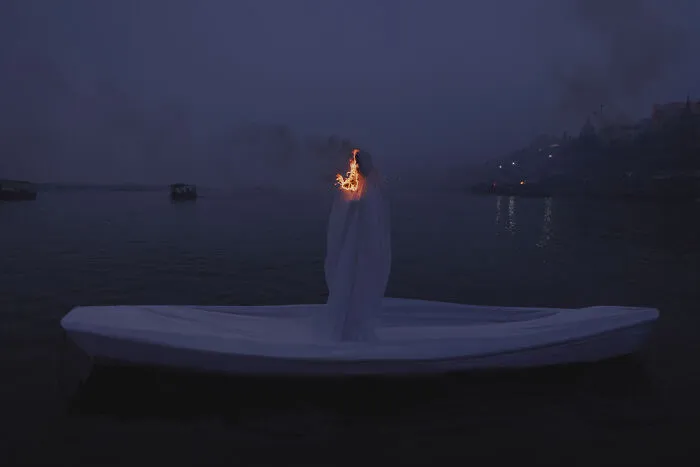
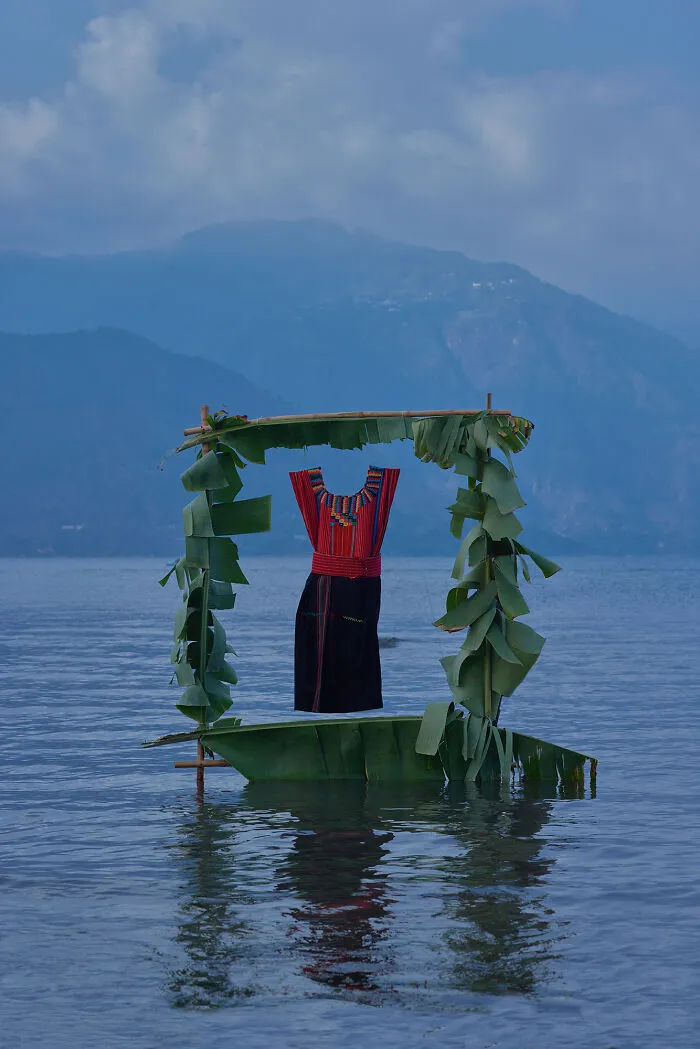
“I spent six weeks in Varanasi, living in the city, observing it and gradually immersing myself in its atmosphere and spiritual energy. Varanasi, or Kashi, is a city deeply connected with the cycle of life, death and liberation. During my time there, I wanted to create an image that would translate this ancient spiritual idea into a visual form.
I created this art installation on the holy River Ganga, using real elements and the environment of the city.
White represents the soul in its purest form. The River Ganga represents purification — the sacred river believed to cleanse the sins of those who enter its waters.
The boat represents the human body, carrying the soul through the journey of earthly life. And finally, there is fire — perhaps the most powerful symbol in Varanasi. The sacred fire of Kashi is traditionally connected with liberation: it is believed that those who are cremated here can attain moksha, release from the cycle of rebirth.
The boat represents the human body, carrying the soul through the journey of earthly life. And finally, there is fire — perhaps the most powerful symbol in Varanasi. The sacred fire of Kashi is traditionally connected with liberation: it is believed that those who are cremated here can attain moksha, release from the cycle of rebirth.
Through this installation, I wanted to create my own visual interpretation of the soul's journey toward liberation, while capturing the spiritual essence of Varanasi as I experienced it during those six weeks.”
Report
8points
#13
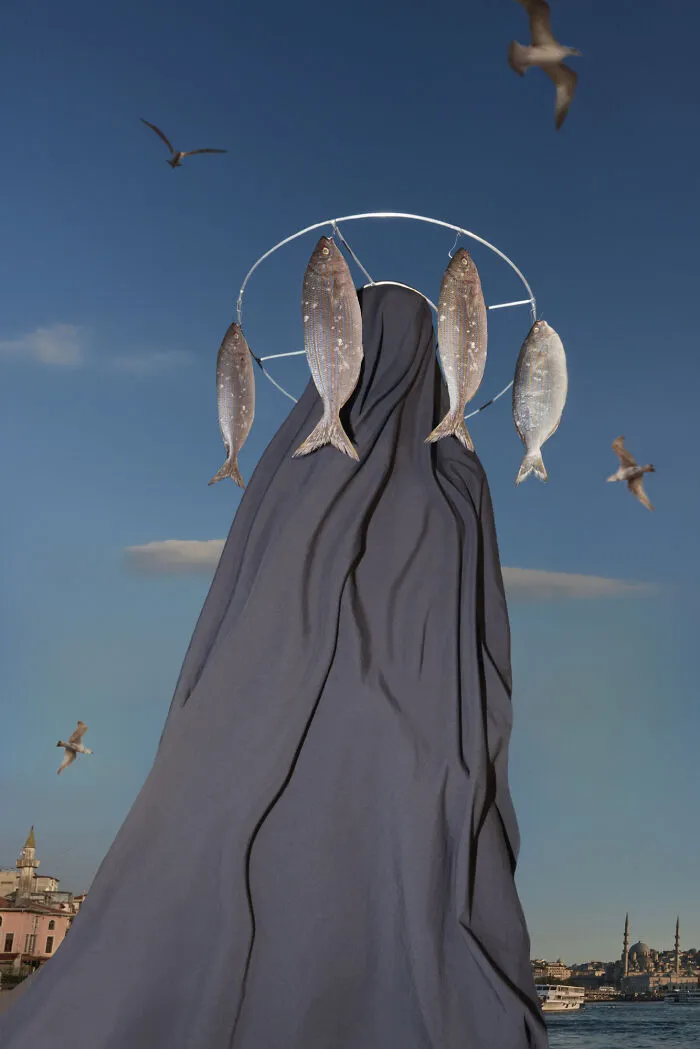
“This image was created in Istanbul as part of my Art Expedition. I was inspired by the visual identity of Istanbul - the long dark silhouettes of Muslim women, the Bosphorus and the city’s deep connection with fishing and the sea.
I wanted to merge these elements into a surreal, almost mythical figure. The costume and the structure carrying the fish were physically constructed for the shoot, and I photographed the scene on the Istanbul waterfront using real fish, the real city and real seagulls.
The image was created entirely as a physical production — NO AI.”
Report
8points
#14
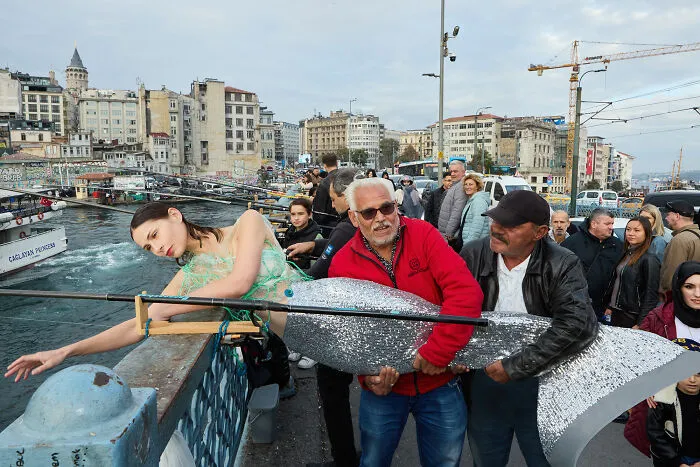
“This image was created in Istanbul as part of my “Art Expedition” I wanted to stage an absurd encounter between a mermaid and the everyday life of the city.
For the shoot, my model wore a handmade silver mermaid tail, and I asked random local fishermen on the Galata Bridge to participate in the scene and pretend they had caught her. I deliberately kept the interaction spontaneous, turning the shoot into a small public performance.
The contrast between the staged fantasy and the real reactions of people who happened to be there was an essential part of the image.
The photograph was created entirely on location with a real model, a physical prop and real participants — NO AI.”
Report
8points
#15
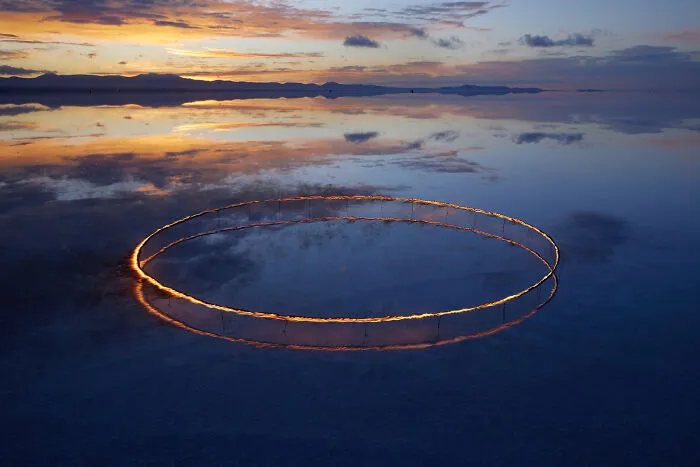
“Created in the pre-dawn mist of the Uyuni Salt Flats, this photograph is part of my Art Expedition series. It emerged as a response to the surreal landscape itself. I work with what the place offers: its textures, emptiness, and silent color palette. The burning circle becomes a visual ritual, echoing the raw beauty and quiet tension of the salt desert. No AI, no effects-just imagination and the landscape as co-author.”
Report
7points
#16
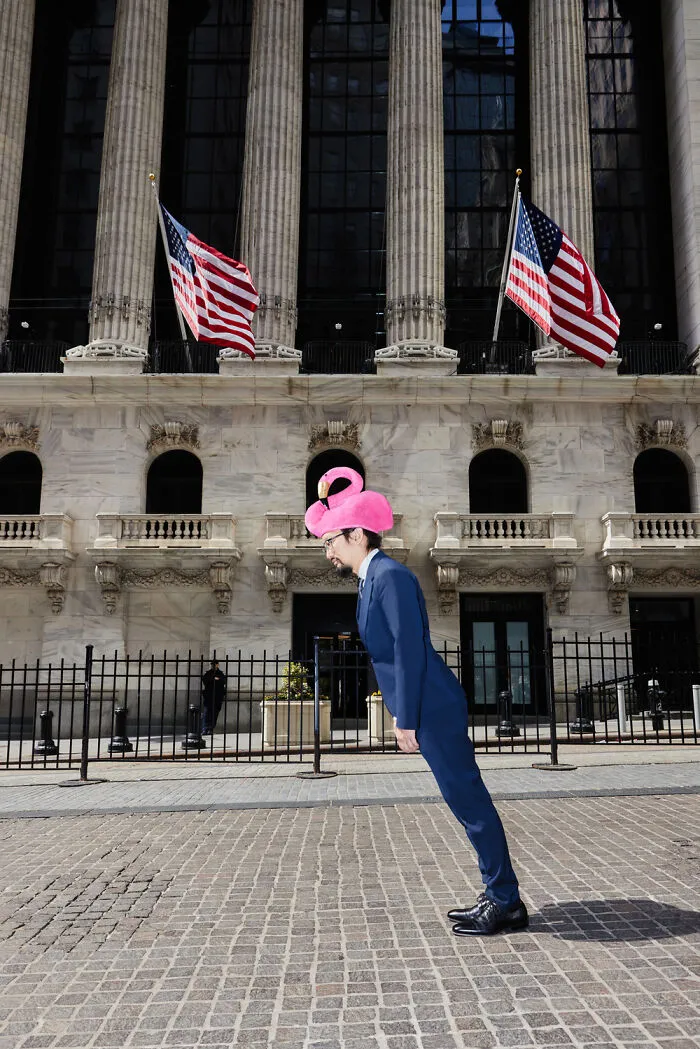
“In this urban intervention, I invited Wall Street professionals to wear absurd flamingo-shaped hats in front of the New York Stock Exchange. The clash between rigid corporate aesthetics and playful surrealism creates a humorous dissonance, questioning conformity, identity, and the boundaries of public performance.”
Report
7points
#17
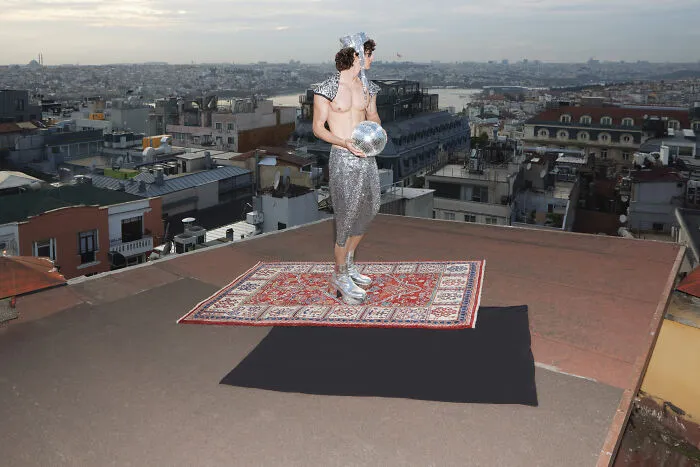
“In Istanbul, I was fascinated by the contrast between ancient tradition and modern life - the crowded streets, the rooftops, the constant movement. Amid this chaos, I imagined a simple, surreal image: a flying carpet above the city. For the shoot, I found a Turkish model and dressed him in a suit created by a local designer who reinterprets traditional elements in a contemporary way. We used an authentic Turkish carpet - handwoven, rich in color and pattern -and brought it to a rooftop overlooking the old town. There the scene became a quiet metaphor for modern Turkey itself - where heritage and imagination coexist in balance, floating somewhere between the past and the present.”
Report
6points
#18
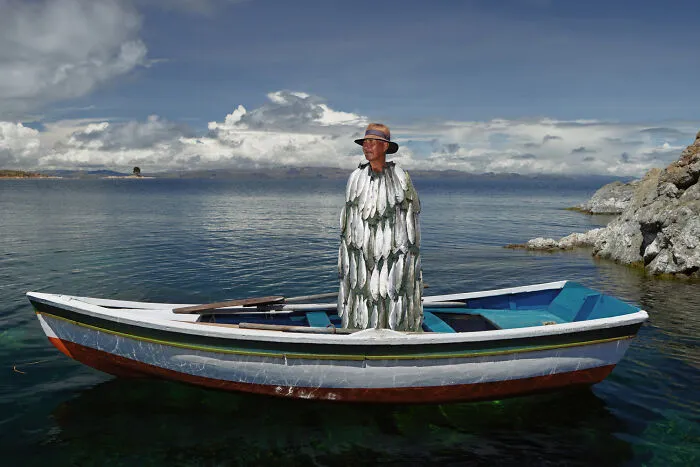
“This photograph was created in collaboration with a real fisherman from Lake Titicaca, who wears a costume made from actual trout caught in these sacred waters. Blending absurdity with ritual, the image transforms local identity into a surreal, symbolic tableau. Part of my Art Expedition in Bolivia series, the work reimagines reality through performative photography—using only found materials and lived stories. The result is a poetic collision of nature, tradition, and dream.”
Report
6points
#19
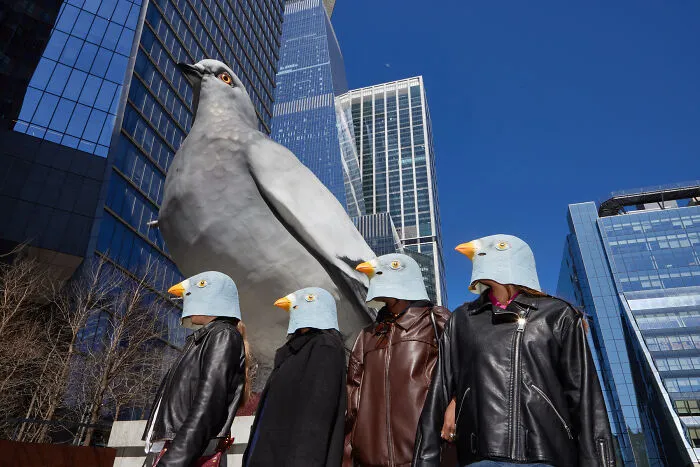
“Absurdist urban performance inspired by the eccentric energy of New York City. I invited random passersby to wear silicone pigeon-head masks and pose in front of a monumental pigeon sculpture.”
Report
6points
#20
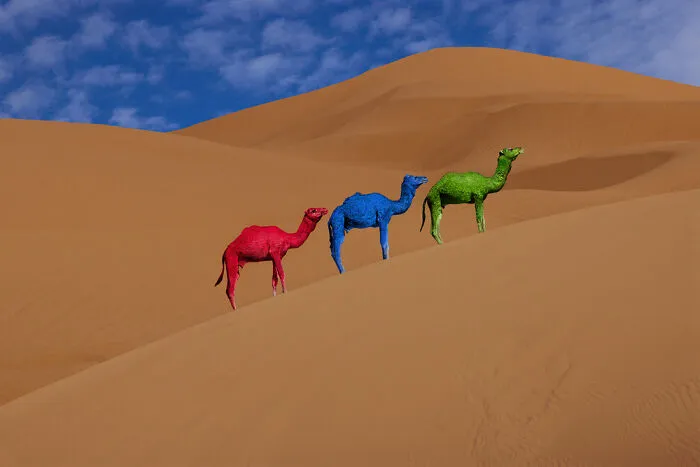
“For this intervention in the Moroccan desert, I collaborated with local camel owners and used authentic Moroccan pigment to transform the animals into walking artworks. Their colorful presence against the neutral tones of the dunes created a surreal visual tension between tradition and imagination. This staged yet site-specific scene became part of my “Art Expedition” series.”
Report
6points