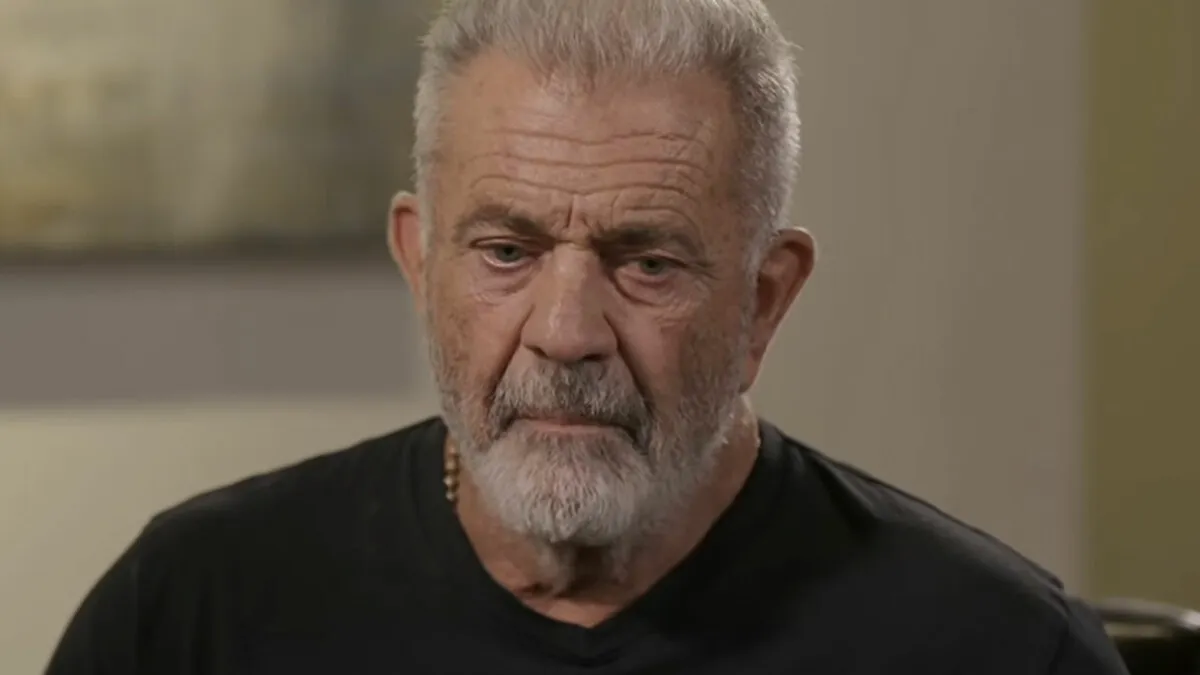
Alien-built pyramids, the Loch Ness Monster, or a flat Earth can be great material for a fun little after-dinner debate. But when these wild theories jump from Bigfoot to cancer, the joke stops being funny. Health conspiracies are not harmless fun… they are dangerous medical lies. In a fair world, spreading fake health advice would land you in jail. But in today’s world, the internet gives modern snake-oil salesmen a massive microphone and millions of gullible followers. Worst of all, the people feeding these fires are often influential, powerful leaders or celebrities. This time, the spark came from Hollywood actor Mel Gibson. He recently made headlines by claiming that two animal deworming drugs — ivermectin and fenbendazole — “cured” stage-four cancer in three of his friends. Naturally, fake-news websites lapped it up and started pushing horse pills as a secret cure Big Pharma doesn’t want you to know about. To cut through the viral hype and unpack the real science, Bored Panda consulted Dr. Ahmed Elbediwy, senior lecturer in cancer biology and clinical biochemistry at Kingston University. PowerfulJRE / YouTube He has a documented history of severe public controversies, including a 2006 DUI arrest accompanied by an antisemitic rant, and leaked 2010 audio recordings featuring violent and racist language toward his ex-partner. He has also been accused of domestic violence, as well as harboring misogynistic and homophobic views. In January 2025, he joined Joe Rogan on his podcast — another guy infamous for spreading misinformation. There, he claimed that antiparasitic drugs ivermectin and fenbendazole — neither approved nor recommended for cancer treatment — had “cured” his friends’ cases. “I have three friends. All three of them had stage-4 cancer. All three of them don’t have cancer right now at all. And they had some serious stuff going on,” Gibson claimed, adding that ivermectin and fenbendazole “really work.” The actor went on to claim that hydrochloride and methylene blue (a fabric dye) are also supposed cures. The episode on the Joe Rogan Experience’s YouTube channel has received more than 14 million views. Rogan, a former reality TV host and one of the most powerful figures in American media, didn’t even try to debunk his claims once. That’s not surprising since Rogan himself has been previously accused of spreading COVID-19 misinformation as well as using racist slurs. He has also faced repeated backlash for providing a platform to polarizing or extremist figures. Getty Images / Unsplash (not the actual photo) The problem with spreading misinformation is that some people take it quite literally. In the six months following Gibson’s comments, ivermectin prescriptions in the US surged by 97% compared to the previous year. Researchers at the University of California, Los Angeles published these findings in May, 2026. They also found that the surge in ivermectin prescriptions was steepest among men, white patients, and residents in the American South. Among people with cancer, the prescription rate for the first six months of 2025 was 2.5 times higher than the year before. “The popularity of these drugs highlights how powerful personal testimonies and celebrity endorsements can be, particularly for patients facing serious illness,” Dr. Elbediwy tells Bored Panda. This isn’t just an American trend, though. In August 2026, an undercover BBC investigation revealed that both drugs were easily obtainable without a prescription in the UK. They were even sold directly from the back of a stairlift salesman’s shop in Wales and listed on major platforms like Amazon. Amazon claimed it took down the listings after the BBC alerted them. Yet, the investigation soon uncovered both drugs back on the site — this time disguised under health and beauty products. Since 2024, UK border officials and health regulators have intercepted massive shipments of these drugs — seizing over 124,000 doses of ivermectin and 27,500 doses of fenbendazole destined for human consumption. Dr. Elbediwy notes that while individual stories may be compelling, medical decisions should be guided by reproducible evidence from rigorous clinical trials rather than anecdotes. PowerfulJRE / YouTube If ivermectin sounds familiar, it’s because the discussion around this drug went viral during the pandemic. It was touted as a potential “miracle drug”, even though clinical trials have consistently shown it does not provide benefits for COVID-19 patients. Interestingly, Rogan was one of the influential people who said he used ivermectin against the illness. Simply put, ivermectin is a drug used to destroy parasites. In humans, doctors prescribe low-dose pills for worm infections and skin creams for head lice or rosacea. Meanwhile, farmers and vets use much stronger versions to treat worms in livestock and pets. Fenbendazole works the same way, but it is strictly an animal drug. Vets use it to clear out roundworms and hookworms in dogs, horses, and farm animals. It is not approved for human use in any form. This drug became popular in 2019 when a patient claimed it cleared his advanced lung cancer. But internet stories routinely gloss over the fine print. At the very same time, he was receiving a novel immunotherapy drug in a clinical trial, making it impossible to credit the animal dewormer for his recovery. National Cancer Institute / Unsplash (not the actual photo) In laboratory dishes and mouse studies, researchers have found that both drugs can interfere with cancer-cell growth and, in some experiments, trigger cell death. These early findings have prompted researchers to investigate whether existing medicines could be repurposed as low-cost cancer treatments. At the same time, researchers are also running early clinical trials to test whether pairing ivermectin with standard cancer drugs can help fight aggressive breast cancer. Other studies are testing whether ivermectin can help the body’s immune system spot and destroy tumor cells. However, lab petri dishes do not equal human bodies. And major health organizations emphasize that there is currently zero clinical trial evidence showing that either drug treats human cancer safely or effectively. “Despite the hype of the drugs online and the fact that both ivermectin and fenbendazole have shown anti-cancer effects in laboratory and animal studies, there is currently no high-quality clinical evidence proving that either drug is an effective cancer treatment in humans or clinical studies,” says Dr. Elbediwy. He further explains that the findings remain largely preclinical, and human trials are still in the early stages, with no evidence these drugs can cure advanced cancer. The US Food and Drug Administration officials also warn that misusing ivermectin carries steep risks. High doses can cause extreme nausea, dizziness, loss of balance, sudden drops in blood pressure, seizures, and even fatalities. They can also clash with proven cancer therapies — making standard treatments less effective or far more dangerous. “Patients who self-medicate with animal-grade or high-dose antiparasitic drugs risk toxicity, incorrect dosing, contamination, and potentially harmful interactions with chemotherapy, anaesthetic agents, or other medications,” Dr. Elbediwy notes. He says Fenbendazole is not approved for human use, and unsupervised use may place additional strain on the bodies organs such as the liver and kidneys. “Perhaps the greatest danger is that patients may delay, modify, or abandon proven cancer treatments in favour of unproven alternatives, potentially worsening their prognosis.” At the same time, Dr. Elbediwy also believes that doctors should respond with empathy rather than confrontation when patients get convinced by fake news. “Acknowledging a patient’s desire for hope, exploring the sources of their information, and clearly explaining the difference between laboratory findings and evidence from human clinical trials can help build trust.” Bermix Studio / Unsplash (not the actual photo) Remember when public speculation during a White House Covid pandemic briefing about using disinfectants or sunlight inside the body triggered widespread panic? Poison control hotlines lit up instantly as health agencies rushed to warn people not to ingest household cleaners. In other cases, false promises that hot water or daily supplements could ward off the virus led people to drop basic safety habits like masks and distancing — leading to more spread of the infection. When official figures or online influencers push unproven medical shortcuts, people listen. A recent global review by the World Health Organization found that during health emergencies, viral misinformation directly worsens public anxiety and drives down vaccination rates. “Twitter, Facebook, YouTube, and Instagram are critical in disseminating the rapid and far-reaching spread of information,” the systematic review noted. Today, people make medical choices in a noisy online world. Anyone can easily find health advice — both true and false — on social media, on podcasts, or from AI chatbots. A recent Pew Research report showed that half of Americans under 50 now get their health and wellness advice from online influencers and podcasters, few of whom have any medical training. “Anecdotes and testimonials are now the strongest forms of evidence — ‘my aunt on Facebook did this, therefore it must be true.’ You don't know their medical records, they could be having other treatment as well,” says three-time cancer survivor and former surgeon Liz O'Riordan. “I see the other side, I see the people where it doesn’t work, where they got sick, where they died. It’s that fear of death — you want control, you want hope, you want to be that one person who's going to make it. I just worry it’s getting bigger, and if we don’t all take notice and start to do something about it, we’re going to be in a very dark place in a couple of years’ time,” she adds. It is impossible to know whether celebrities like Gibson and Rogan actually believe their own claims, or if they are simply chasing clicks and headlines. What we do know is that the consequences of fake health news are measured in human lives. Facing a cancer diagnosis leaves people desperate for hope — and when standard care is costly, grueling, or uncertain, viral promises of cheap, everyday cures can spread like wildfire. But despite internet hype, neither ivermectin nor fenbendazole is an approved cancer treatment. We have to stop confusing fame with expertise. Because at the end of the day, being an Oscar nominee or a famous podcaster doesn’t make you smart — and it certainly doesn’t make you a doctor. Raymond Arroyo / YouTube