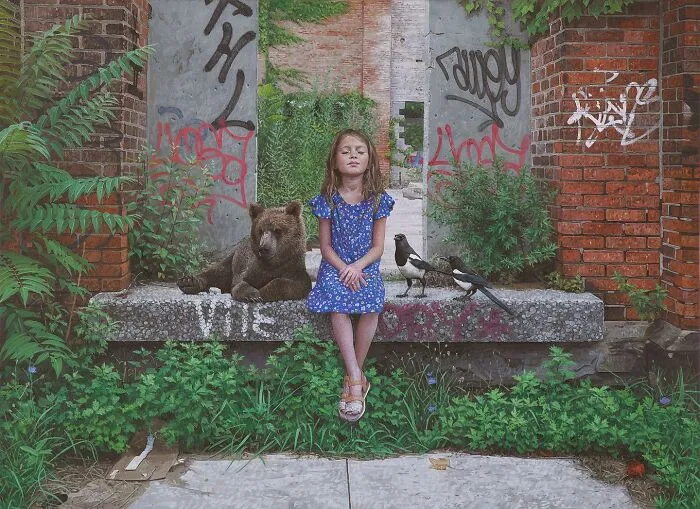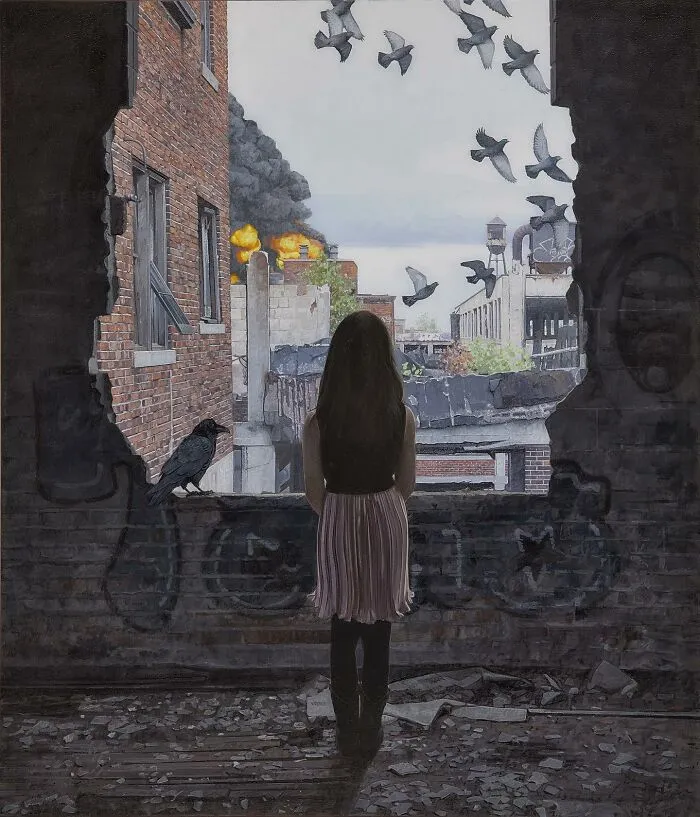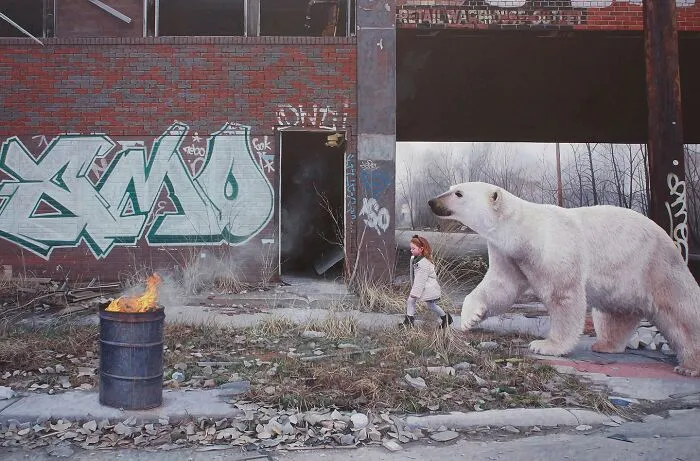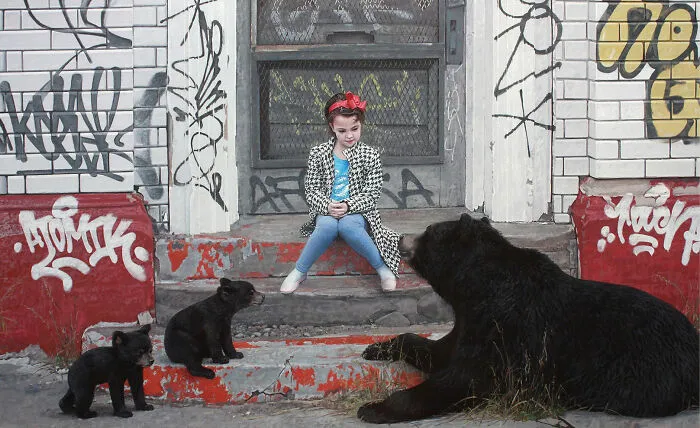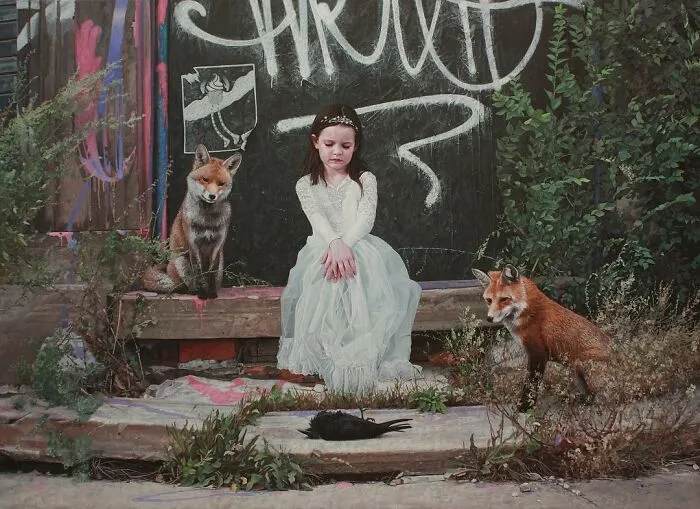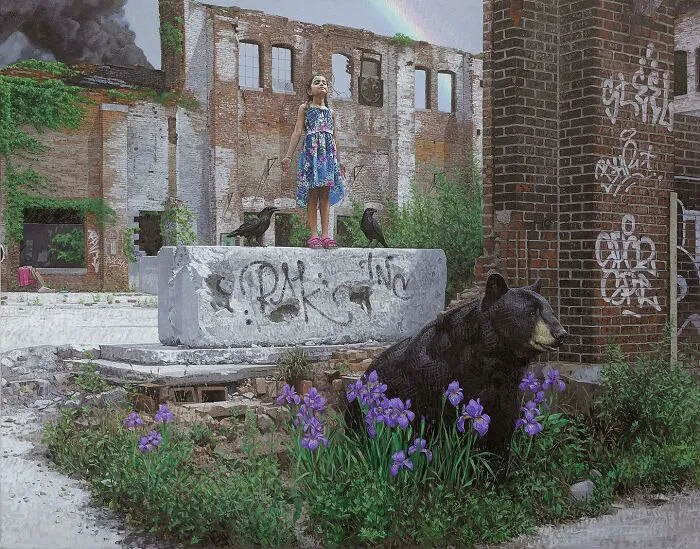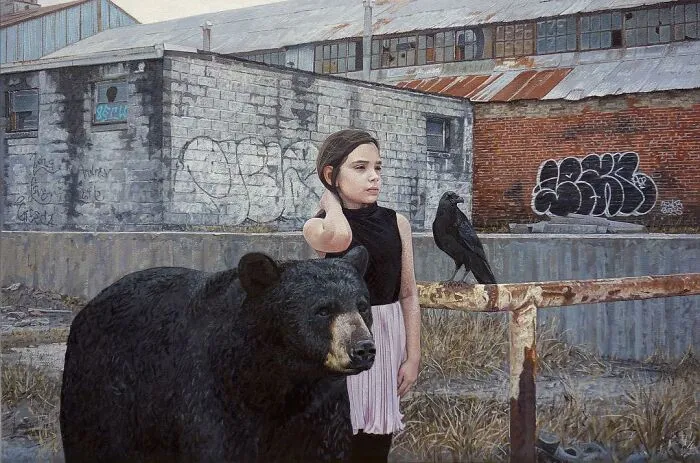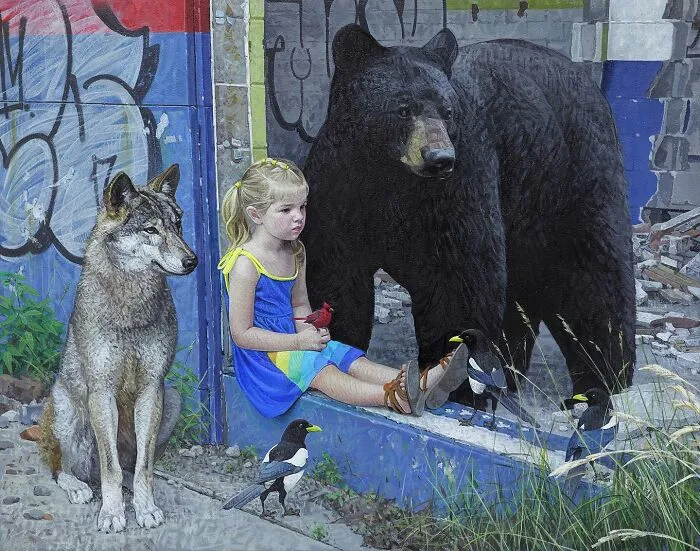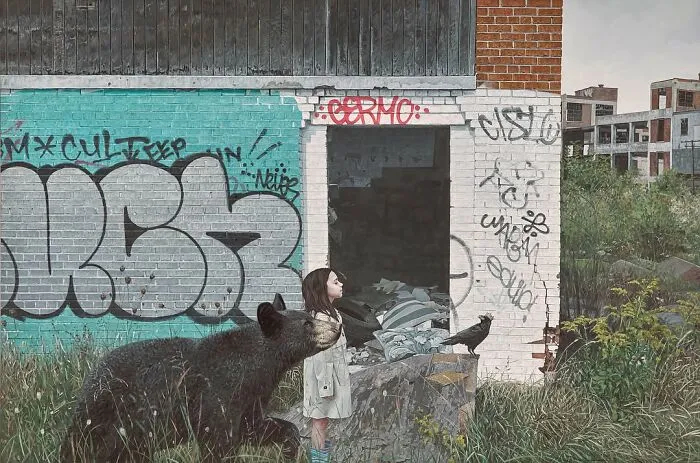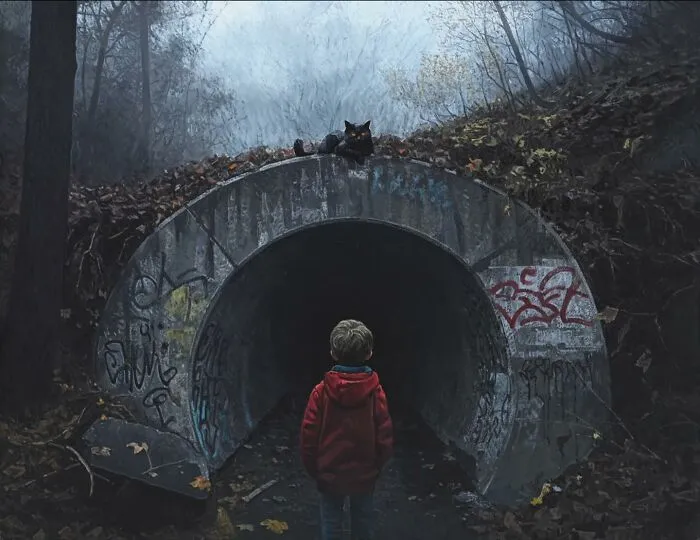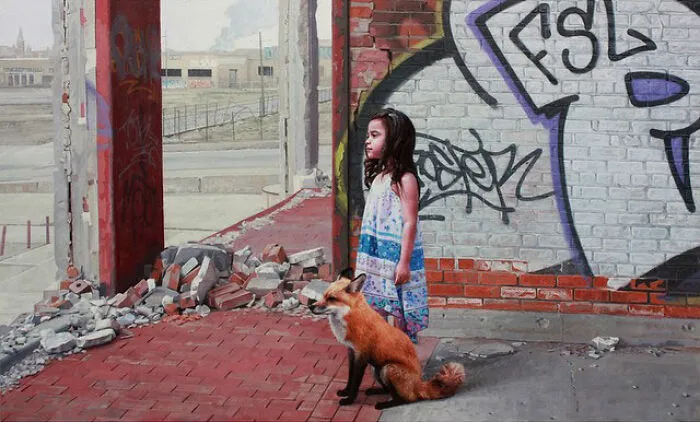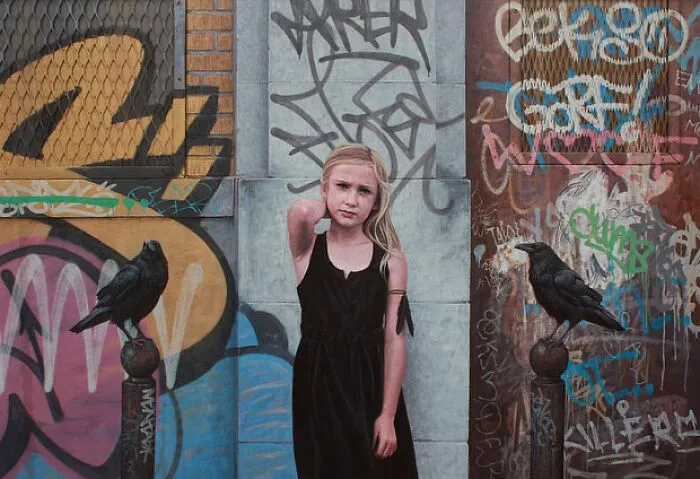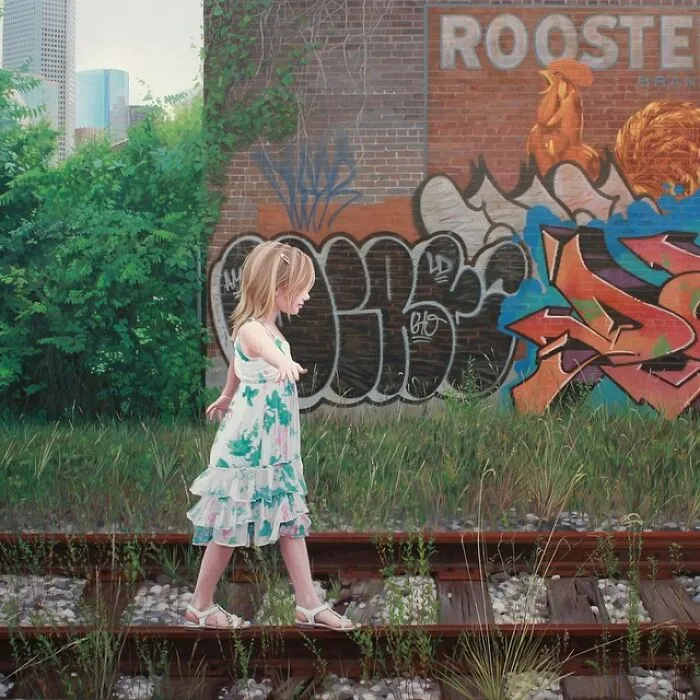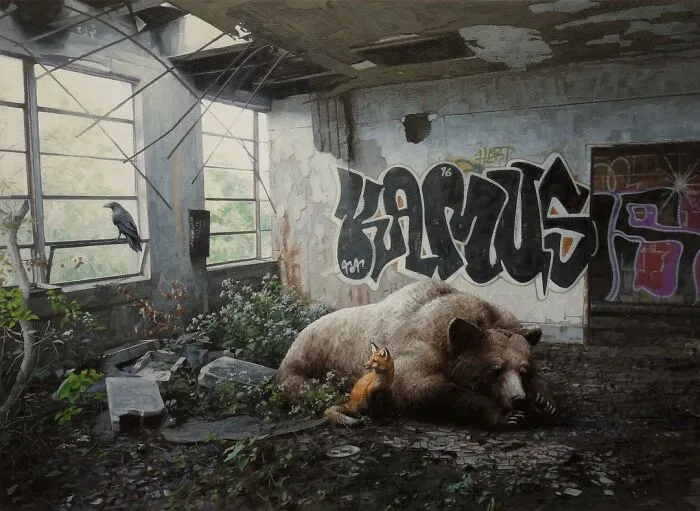
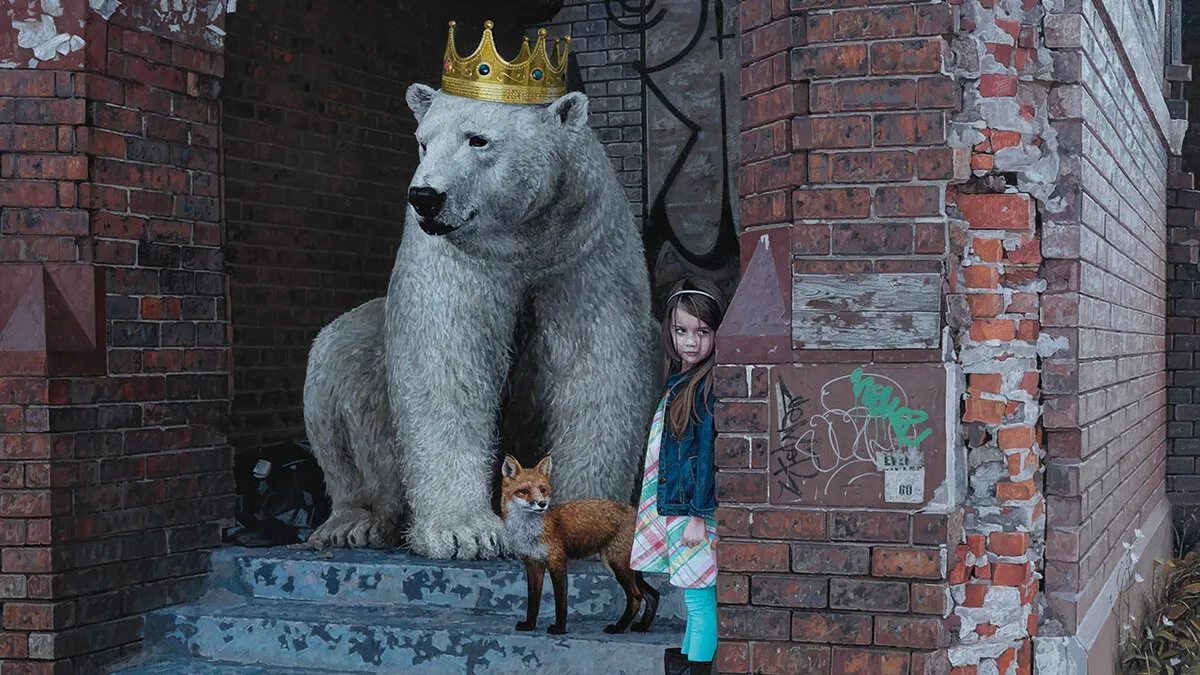



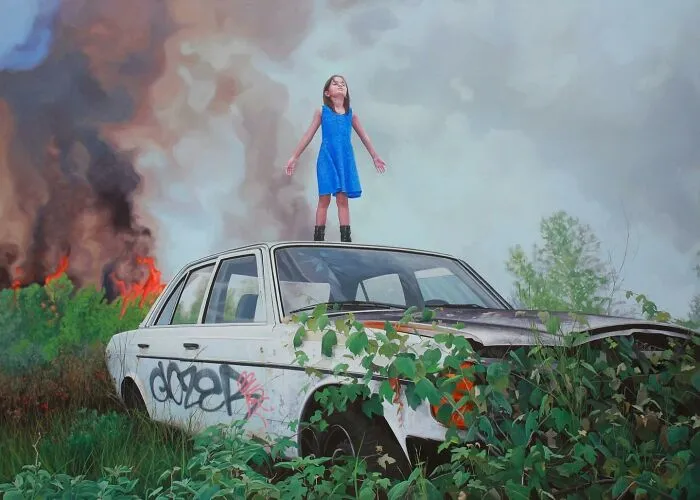
Peterson’s personal history helps give some context to the recurring themes in his paintings. He describes his work as an exploration of growing up and learning how to live in a world that is already damaged. Trauma, fear, isolation, vulnerability, and loneliness appear throughout the imagery, but so do resilience and survival. His young subjects often seem tiny compared with their surroundings, yet they rarely appear completely helpless. Instead, they walk, wait, or explore alongside animals that can feel simultaneously protective and slightly unsettling.
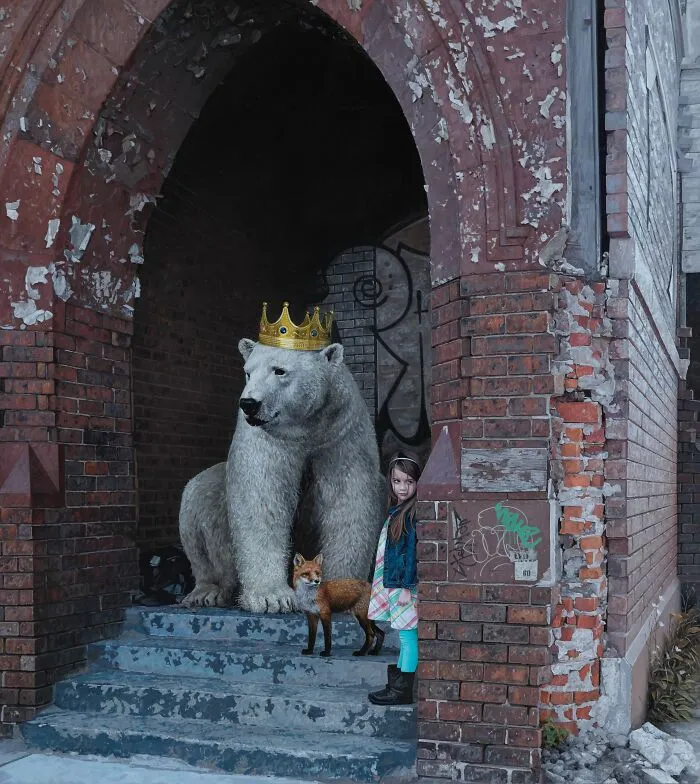
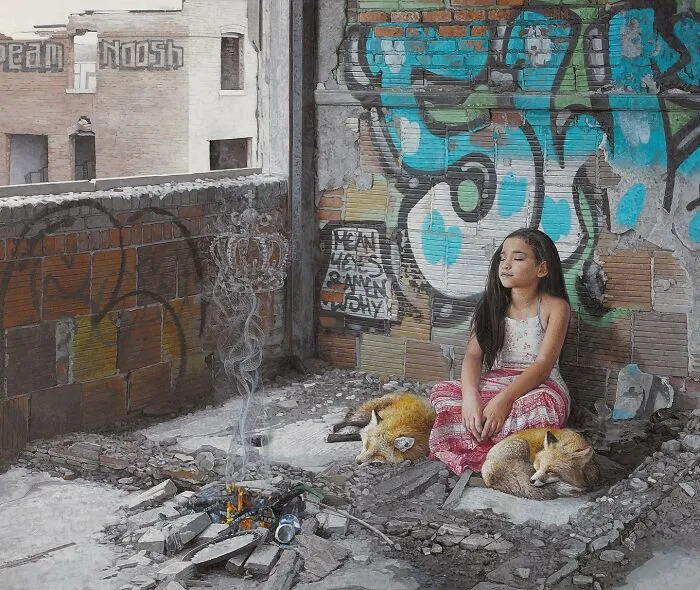
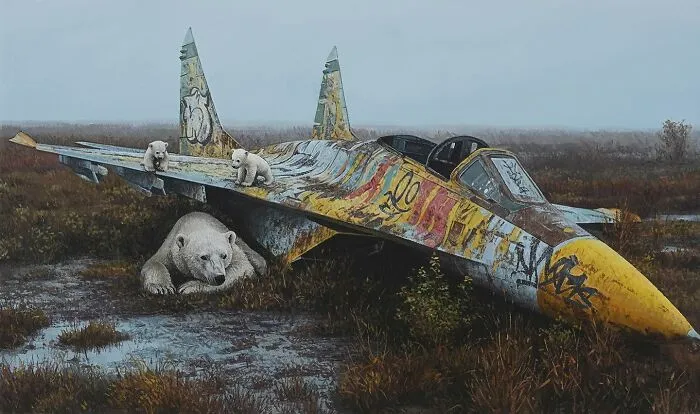
That relationship between children and animals is one of the most distinctive elements of Peterson’s work. He uses these unlikely alliances to explore ideas such as protection and restraint, freedom and confinement, and the invisible forces that shape the way people move through the world. Visually, the contrast is made even stronger by his highly detailed, near-photographic approach. At times, nature appears to be slowly reclaiming these forgotten spaces, making the environments feel like remnants of a civilization that has already moved on. Against all of that decay, the children and animals become the emotional focus of each scene.
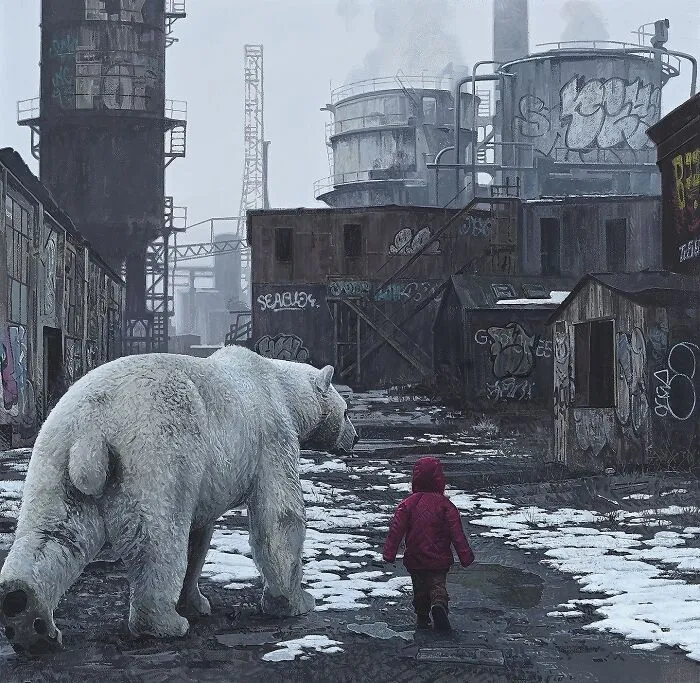
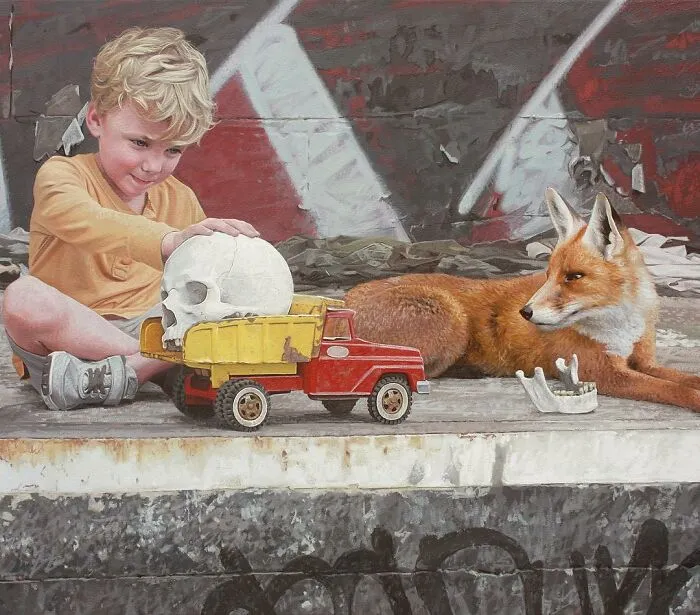
Despite the dystopian appearance of many of these paintings, Peterson’s work is not entirely about hopelessness. His figures are surrounded by evidence of a broken world, yet they continue moving through it, often accompanied by creatures that suggest companionship, instinct, and protection. That tension between vulnerability and resilience is what gives these haunting scenes much of their emotional weight.