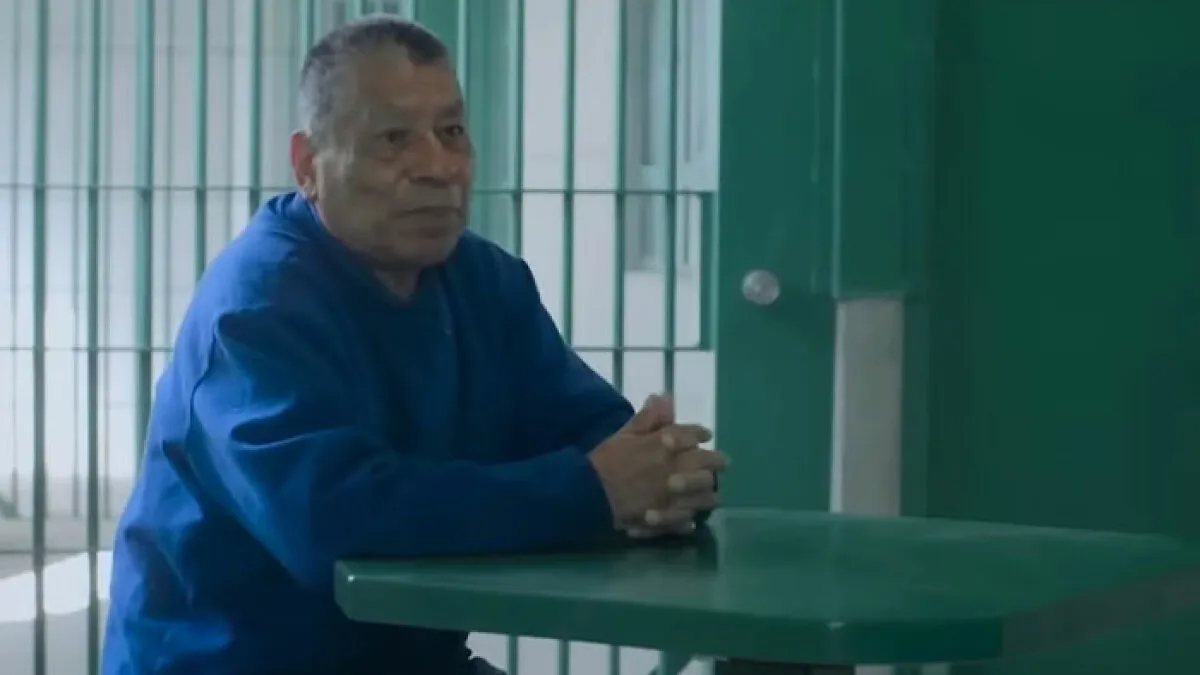
For decades, Andrés Mendoza moved through the Lomas de San Miguel neighborhood as an unremarkable older man. Residents had grown fond of him, calling him “El Chino” because of his facial features. He greeted people in the street, volunteered in community affairs and offered help when neighbors needed repairs or work. Behind the doors of his modest home in Atizapán de Zaragoza, however, Mendoza had built what can only be described as an archive of hate. Mendoza, the butcher, had come to despise women. Over the course of three decades, he collected over 4,000 bones, while ledgers preserved his victims’ names, and every detail of their bodies. The discovery became one of the most gruesome criminal cases in Mexico’s history, “the Atizapán Cannibal.” EL IMPARCIAL Mendoza was born on November 29, 1947, in Zimatlán de Álvarez, Oaxaca, into a large family whose history would remain largely hidden. Photographs later recovered showed him with his mother and siblings, but almost no public record survives of his schooling or adolescence. What is known, however, is that those early years were marked by extreme poverty and a violent father who drank and beat him. That’s where Mendoza learned to hate. Edomex Prosecutor's Office In the 1980s, he left Oaxaca for the expanding metropolitan area around Mexico City and settled in Atizapán. He found work as a butcher, including years at a slaughterhouse or meat-processing operation in Tlalnepantla. There, he learned how to handle knives, divide flesh and separate joints with practiced efficiency. The trade, investigators came to believe, gave direction to the rage he carried from childhood. FGJEM He never married and had no children. A sister and niece lived nearby, but Mendoza occupied his house alone and carefully cultivated the image of a harmless, useful neighbor. That was never the case. His homicide spree began early, in 1994, with a woman whose identity was never made public. FGJEM Poverty had left him with deep shame and low self-esteem, and repeated rejection by women hardened that resentment. Rather than confront his own failures, he punished women for “humiliating” him. In 2021, neuropsychology specialist Feggy Ostrosky confirmed this after spending six hours interviewing him. Her profile described a man consumed by hostility toward women and preoccupied with being rejected because of his age, appearance and lack of money. Mary Fer Centeno Mendoza often met women in bars around Tlalnepantla, where some worked. At other times, he approached them through the neighborhood and offered money, employment, repairs or help obtaining social benefits. Once trust was established, he invited them home to drink or spend time with him. If a woman rejected his advances or refused the relationship he believed he deserved, he attacked her with a knife. He then dismembered the body and hid many of the remains beneath the floor of a basement-like room below his bedroom. Las Estrellas Norma Jiménez Carreón disappeared in Tlalnepantla on August 6, 2011. On April 7, 2012, a woman later identified only as B.S.O. left her home in Coacalco to meet someone and never returned. Berenice Sánchez Olvera, who was in her early twenties and worked at the El Marinero bar, also entered the list of possible victims. So did Alyn and Gardenia, two women Mendoza met at El Barrigón and pursued after both rejected him. Their full identities and fates were never publicly reconstructed. Mendoza’s facade remained intact. Las Estrellas In 2015, he was even able to extend his public identity into politics. During the administration of mayor Ana María Balderas Trejo, he became president of his neighborhood’s Citizen Participation Council. He later supported activities associated with the Va por México coalition and mayoral candidate Pedro Rodríguez Villegas. Many more victims would follow. FGJEM On October 16, 2016, 38-year-old Flor Ninive Vizcaíno Mejía vanished in Tlalnepantla. She was a mother of two who worked in the city. Rubicela Gallegos Castillo, 32, had moved from Monterrey in search of a better life for her son and worked as an Uber Eats delivery driver. She disappeared on July 20, 2019, after going to a restaurant. Investigators would later find notebooks containing as many as 30 names. Alongside them were anatomy books, films about serial criminals, cassette tapes and video in 9-millimeter and VHS formats. Mendoza photographed and recorded victims, saved pieces of hair and facial tissue, and recorded each victim's body part in detail, including weight. He would later eat some of them. FGJEM On May 14, 2021, 34-year-old Reyna González Amador planned to meet her husband, Bruno Ángel Portillo, in downtown Mexico City so they could buy merchandise for their mobile-phone business. Before joining him, she was going to stop briefly at Mendoza’s house. He had gained her trust by bringing phones to her for repairs and helping with painting and metalwork. He had attended family gatherings and was regarded as a family friend, not a romantic partner. “We pitied him. We supported him,” Portillo later said, rejecting early reports that tried to portray his wife’s visit as an affair. FGJEM Reyna was the mother of two girls, and the false story compounded the family’s grief. When she failed to meet Portillo and her phone began sending calls to voicemail, he went to Mendoza’s house. A tenant said the older man was asleep, and Portillo left believing his wife might already be waiting at home. She never returned. But Mendonza had angered the wrong man. Portillo, a municipal police chief, used public-security camera footage and cellphone-location records to retrace her route. Everything led back to the house on Margaritas Street. Noticias Telemundo On May 15, he confronted Mendoza, who denied that Reyna had visited. Portillo wouldn’t have it, he forced his way inside and found his worst nightmare waiting for him inside. His wife’s dismembered body on a dining-room table. He subdued Mendoza. He could’ve ended him, the one who had taken everything from him, the one who had left his children without a mother then and there. Still, Portillo did his duty and called the police. Mendoza was arrested that day and taken to the prison in Tlalnepantla. Policia Estatal What initially appeared to be the investigation of just one femicide changed as officers searched the property. Beneath the floor they found what seemed like endless amounts of human bones. Around the house were also clothing, shoes, handbags, makeup, identification documents, Polaroids, notebooks and recordings belonging to numerous women. When interrogated, Mendoza’s description of why he had targeted Reyna only made things worse for Portillo and the countless relatives of his victims. “I removed the skin from her face because she was very beautiful,” he said. “I do not deny it,” he added during his first hearing. “I blame myself too. All I want is to tell the truth.” Las Estrellas Forensic teams spent weeks breaking through floors and examining the property. The first major count reached 3,787 bone fragments. As the work continued, reports placed the total above 4,300 and eventually at roughly 4,600. Analysis indicated that the remains included primarily women, as well as a child and a man. The State of Mexico Attorney General’s Office widened its work to disappearances in Atizapán, Tlalnepantla and Coacalco. Policia Estatal Investigators catalogued every fragment, compared DNA with missing-person databases, examined photographs and belongings, matched names in the ledgers to disappearance files, analyzed the recordings and reconstructed Mendoza’s relationships with women from bars and the neighborhood. On March 18, 2022, a judge in the Tenango del Valle Judicial District sentenced Mendoza to life imprisonment for Reyna’s femicide. The ruling also imposed financial penalties and suspended his civil and political rights. The case also became an indictment of the system that had failed missing women for decades. Mary Fer Centeno On June 27, 2022, the five-part documentary Caníbal: Total Indignation premiered with support from Mexico’s Supreme Court. Through relatives, neighbors, officials and specialists, the series examined the murders alongside femicide, disappearance, impunity and gender violence. The victims had effectively been reduced to statistics. When local officials objected that the production could damage Atizapán’s image, then-Supreme Court president Arturo Zaldívar answered that the authorities had damaged it by failing to search for the women for 31 years. Seven more sentences followed. Mendoza received 55 years on October 17, 2022. A court added 92 years on January 18, 2023. Four further 55-year sentences came on March 29, July 10, August 23 and December 6, 2023. On February 8, 2024, Mendoza received a sixth 55-year term for the femicide and disappearance of B.S.O. He was also ordered to pay a fine of approximately $6,160 and another $108,300 in material damages. Las Estrellas The fixed terms total 422 years in addition to life imprisonment. In August 2025, Mendoza was transferred from Tenango del Valle prison to a hospital in Toluca with serious respiratory complications, reported as tracheal stenosis and hospital-acquired pneumonia. He returned to prison that October. As of September 17, 2026, he is alive and remains incarcerated at Tenango del Valle.